⭐️⭐️⭐️⭐️ (4/5 Stars)
Overall Concept & Plot
A Yoruba Myth Comes Alive in Modern Nigeria
Agbara Afrika Meje Issue #1 is a strong and confident debut that mixes classic Yoruba mythology with modern Nigerian student life in a way that feels fresh and exciting. The title, which translates to “Seven African Powers,” already hints that this is a story about destiny, ancient forces, and people who are not ready for the weight they are about to carry.
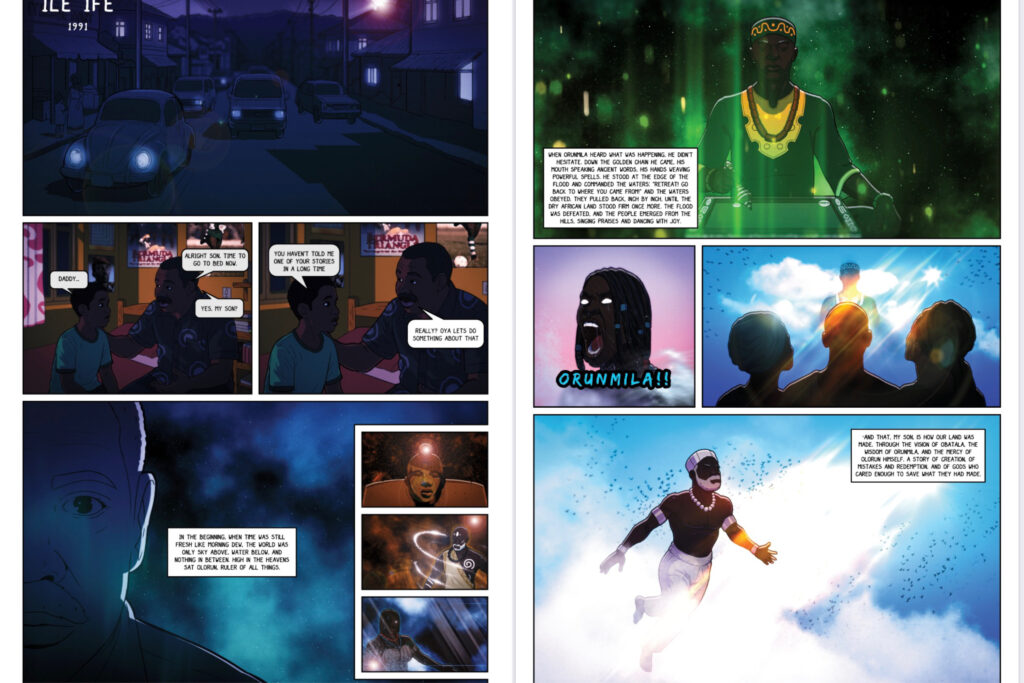
The story opens in the past, drawing from well-known Yoruba creation myths involving Obatala, Olokun, and divine intervention in Ile-Ife. This myth isn’t just background decoration, it becomes the backbone of the entire story.
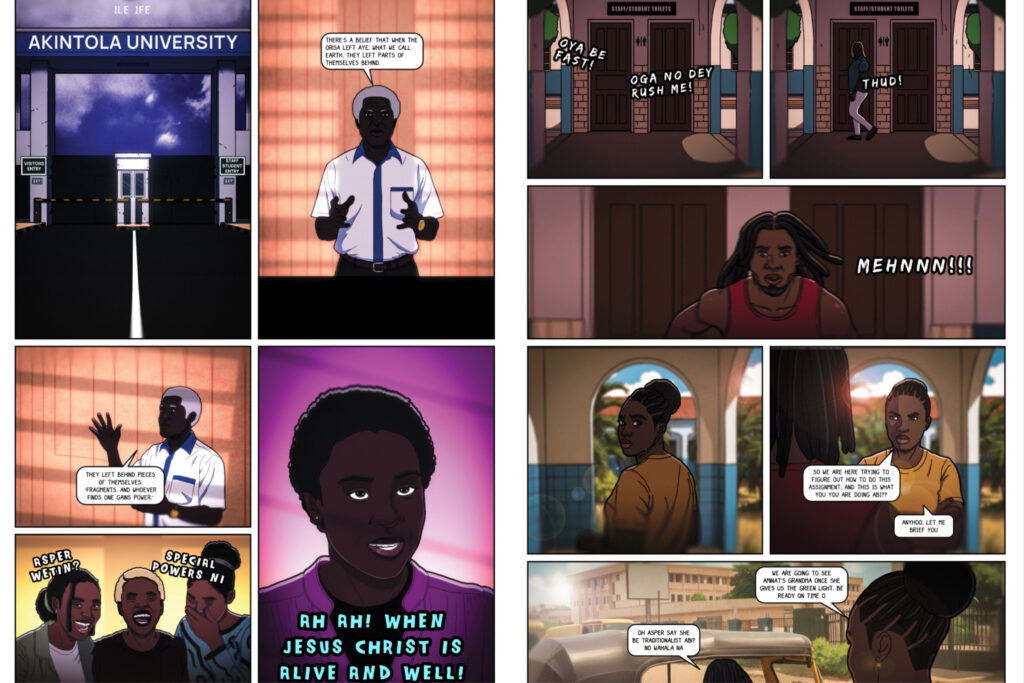
We then move to present-day Nigeria, where a group of university students, Aminat, Rinu, Seyi, and Mayowa, are given a tough academic assignment at Akintola University. What starts as a normal school task quickly turns dangerous when Aminat’s grandmother reveals the truth: the Orisa left behind real fragments of power, scattered through sacrifice by Ooni Odidimode Rogbeesin.
From that moment, the story stops being theory and becomes survival.
Creative Team & Execution
Story: Mayowa Ogun & Tope Victory
Art: Mayowa Ogun
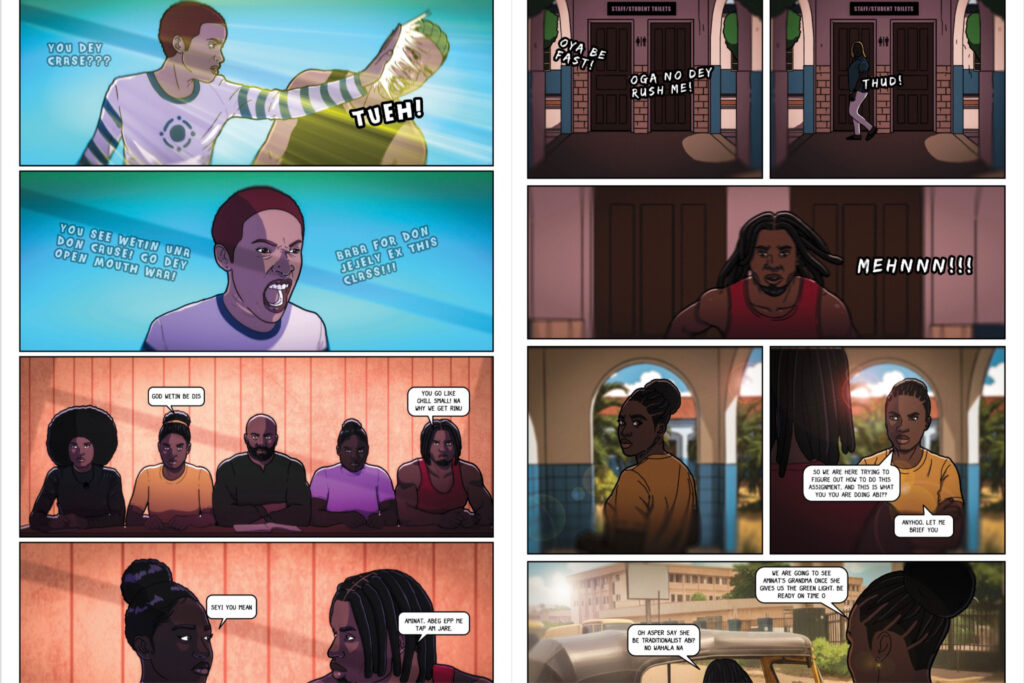
The writing shines most in how real it feels. The dialogue sounds exactly like Nigerian students, not forced, not polished, just natural. The use of Pidgin like “You dey crase?” and “Abeg oh” grounds the story firmly in Nigeria and makes the characters instantly relatable.
The pacing is well handled. The comic takes its time explaining the myth without dragging, then smoothly shifts into the present-day storyline without losing momentum.
Art & Colouring
Bold, Expressive, and Full of Energy
Mayowa Ogun’s art style is bold and expressive. The mythological scenes are rich with deep colors and dramatic imagery, especially during the creation story and flood sequences. Characters are easy to recognize, and the elders, students, and deities all feel visually distinct.
The art does a good job of separating the ancient world from modern Nigeria, helping readers move easily between timelines.
Highlights: Moments That Stand Out
1. The Yoruba Creation Story (Pages 5–12)
This is one of the strongest parts of the comic. Obatala’s mistake with palm wine, Olokun’s flood, and Orunmila’s intervention are clearly told and beautifully drawn. It gives readers everything they need to understand why the powers matter and why they are dangerous.
2. Campus Life & Classroom Chaos (Pages 14–20)
The classroom scenes with Professor Adeboye are both funny and realistic. The students’ reactions, disbelief, sarcasm, fear, and jokes, feel very Nigerian and make the story fun before things turn serious.
Why You Should Read It
- It tells an African myth from an African point of view
- The characters feel real, not like generic heroes
- It blends humour, culture, and danger naturally
- It sets up a bigger story without rushing
If you enjoy comics that mix culture, mystery, and destiny, this one is worth your time.
Areas for Improvement (Critics)
Busy Panels (Pages 16 & 20): Some dialogue-heavy scenes feel a bit crowded, making the flow slightly harder to follow.
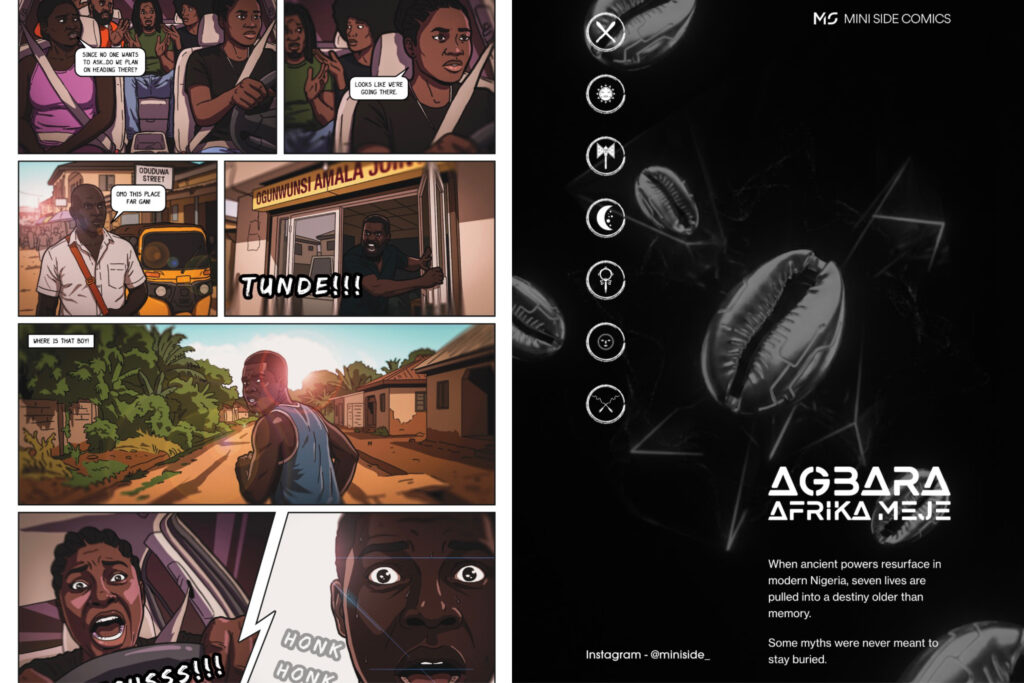
Secondary Characters: While the main students are clear, characters like Tunde (Page 25) could use a stronger introduction to help readers remember who is who early on.
Continue Reading
AGBARA AFRIKA MEJE #1 is published by MiniSide Comics.
Follow the series and creators on Instagram: @miniside_
Final Verdict
Agbara Afrika Meje #1 is a strong opening chapter with heart, culture, and ambition. It respects Yoruba mythology, sounds authentically Nigerian, and sets up a larger story that feels worth following.
ComicPanel Verdict: A promising African comic series with real identity and direction.