Writteb By Damilola Durojaiye
Let us real teaching STEM in Nigeria is not easy. Science, Technology, Engineering, and Math, they are vital for the country’s growth, but students often struggle with them.
The usual classroom routines; chalkboards, memorizing facts, and the occasional quick lab demo, rarely spark any genuine curiosity.
Sometimes, these methods feel lifeless, and abstract concepts just slip right past the students.
That is where animation comes in, cartoons and motion graphics do not just make lessons fun, they help break down tough ideas, keep students hooked, and actually make things stick.
Where STEM Education Stands Right Now
The reality? STEM education in Nigeria is up against a lot. Classrooms are packed, labs barely exist, and teachers have few modern tools to work with.
Official bodies like WAEC and NECO keep reporting low scores in math and science, proof that students find these subjects tough.
Many kids see STEM as intimidating, and that pushes them away from careers in science or tech.
It is even harder in rural areas, where electricity and digital resources are scarce. This gap makes STEM seem out of reach for a lot of students.
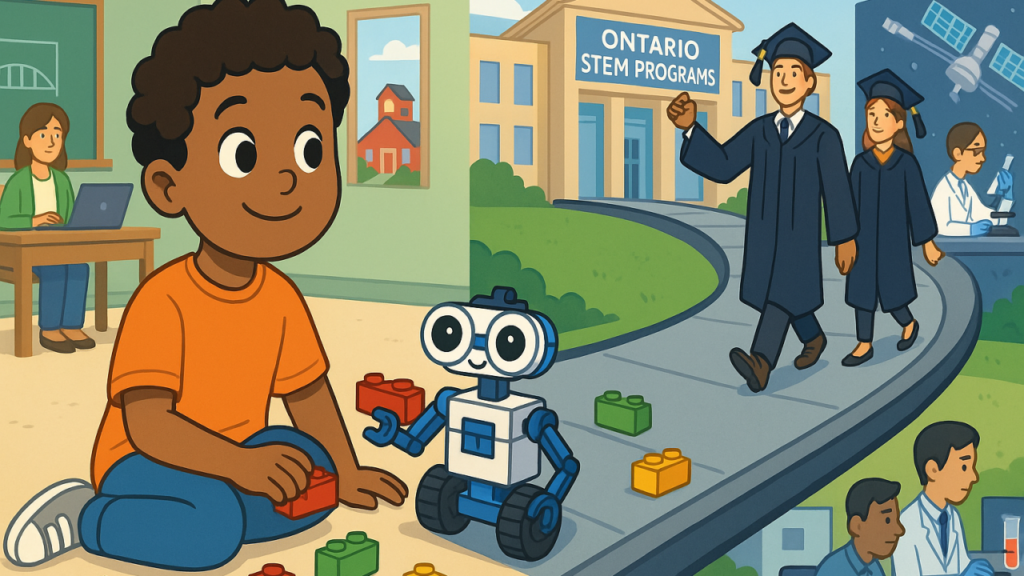
How Animation Changes the Game for STEM
Animation connects theory to real-life understanding. Take molecular bonding, it is tricky to picture on a chalkboard, but a simple animation can show atoms coming together in a way that actually makes sense or let us look at physics for example, animated visuals can make electricity and math functions much clearer.
Kids love cartoons, they grab attention way faster than boring diagrams or dry text. Nigerian classroom studies show that students taught with cartoons remember stuff longer and solve problems better.
In Jos, Plateau State, teachers tried animated chemistry lessons with secondary students.
The difference was huge; students felt more confident and got better test results. Animation flipped their mindset from “too hard” to “I get this.”
Animation in Action: Real Nigerian Classrooms
University researchers keep digging deeper. In Jos, the students using animated lessons outperformed their peers who stuck with traditional teaching. They also started wanting to study science for real.
Even in rural schools where power cuts and lack of gadgets are common, animation made a difference. One study with 83 students found improved scores after watching animated science lessons.
Teachers were happy too; using animation for teaching reduced their prep time and made lessons less stressful. Honestly, animation helped level the field between city and countryside.
Why Animation Work for STEM in Nigeria
There are several perks:
- Better grades: animated lessons lead to higher scores.
- Confidence boost: students do not fear STEM so much anymore.
- Local flavor: cartoons can use Nigerian stories, languages, and culture, so lessons feel close to home.
- Easy to share: once the animation is made, it can reach thousands of schools, no problem.
- Affordable: animations can show experiments without needing real lab gear much cheaper overall.
What is Holding Animation Back?
Animation has plenty of challenges. Power outages and patchy internet slow things down, especially outside the big cities.
Many teachers are not trained to use digital tools, so they often stick with old methods.
There is also not enough money for making top-notch educational animation also in a country with so many languages, animations in Yoruba, Igbo, and Hausa matter if everyone is going to benefit.
One last thing: these cartoons need regular updates so they keep up with what students are supposed to learn.
Moving forward animation in Nigerian STEM classrooms is just getting started.
Support from the government and groups like NGOs could really move things forward; especially if they put animation in the official curriculum.
Local studios are cranking out content that speaks to Nigerian kids, mixing in the culture and language. Since almost everyone has a phone, animated lessons could reach students wherever they are.
New tech like AI and virtual reality might make learning even more immersive.
Down the line, Nigeria has a shot at becoming Africa’s go-to source for educational animation, sharing its creations across the region if animation in education is taken seriously.
Animation is not just for laughs, it is a real game-changer for Nigerian education. Animated teachings make STEM fun, accessible, and relevant.
Kids in Jos and out in the countryside are proof that with animation, scores rise, confidence grows, and tough subjects become clear.
For this to work everywhere, Nigeria has to invest in tech, teacher training, and homegrown content.
With the right push, animation could close the STEM gap and set Nigeria up as a trailblazer for educational innovation across Africa.
When students can see science, they finally start to believe they can understand it.