Written By Mosopefoluwa
For decades, animation has been a story of evolution.
From painstaking hand-drawn frames to groundbreaking 3D worlds, every generation of animators has witnessed technology reshape the craft.
What once required hundreds of artists working on transparent cels is now created on digital tablets and powerful animation software.
But in 2026, a new technological wave is crashing into the animation industry and it’s far more controversial than any before it.
Artificial Intelligence. Across studios, animation forums, and creative communities, the same question keeps surfacing:
Is AI empowering animators… or quietly disrupting the industry that built animation in the first place?
The New Assistant in the Animation Studio
Imagine an animator working late into the night, racing against a production deadline.
In the past, creating a simple scene could take days. Every movement had to be drawn frame by frame, backgrounds painted manually, and colors adjusted by hand.
Today, AI tools are entering that same workflow quietly accelerating the process.
Modern animation pipelines now use AI to assist with:
• In-betweening (generating frames between key poses)
• Background generation and environment concepts
• Color grading and lighting suggestions
• Early storyboarding drafts
• Motion prediction for character animation
Programs like Blender, Adobe After Effects, and Runway ML are already experimenting with AI-assisted tools that speed up traditionally slow animation tasks.
For studios facing rising production costs and tight release schedules, this technology is incredibly attractive.
A scene that once required weeks of manual labor can now be produced in days. But here’s the crucial detail many animators emphasize:
AI is a tool not the storyteller. Emotion, pacing, humor, and character personality still rely heavily on human direction.
No algorithm can replicate the creative instinct of an experienced animator deciding exactly how a character should move, pause, or react.
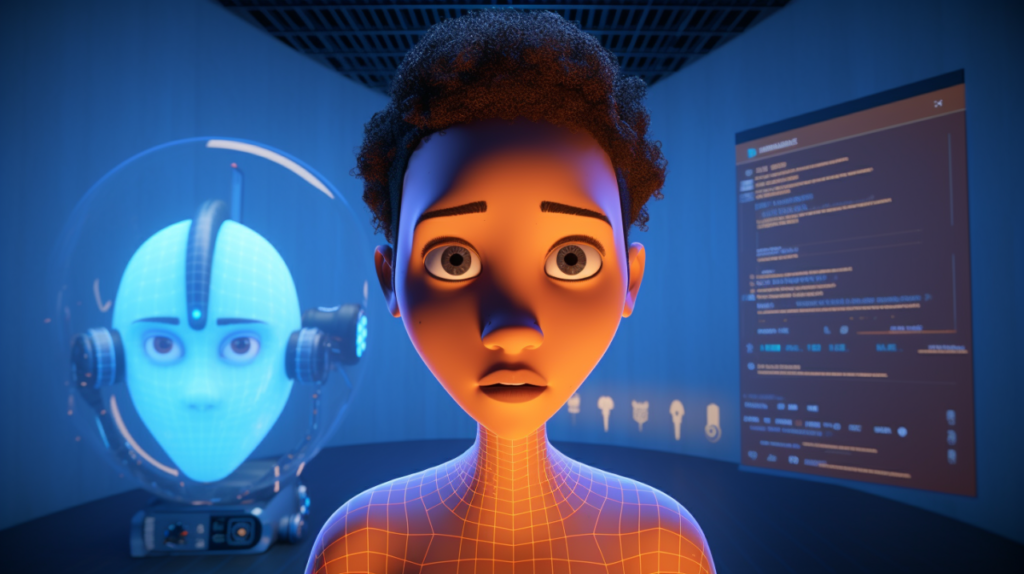
The Quiet Revolution for Independent Creators
While big studios are experimenting cautiously with AI, the most dramatic impact may actually be happening outside them.
Independent animators are gaining access to tools that were once locked behind massive studio budgets.
For years, creating high-quality animation required expensive equipment, specialized teams, and long production timelines.
AI is changing that equation. A solo creator with a laptop can now:
• Prototype animation ideas in hours instead of weeks
• Generate rough backgrounds quickly
• Experiment with multiple visual styles
• Automate repetitive animation tasks
For creators across Africa and other emerging creative markets, this shift could be transformative.
Animation is slowly becoming less about who has the biggest budget and more about who has the most compelling ideas.
In places like Nigeria, where animation studios are steadily emerging, AI could help small teams compete with global productions faster than ever before.
The Industry’s Growing Anxiety
Of course, not everyone is celebrating the AI revolution.
Inside animation circles, the conversation is becoming increasingly tense.
Some animators fear that heavy reliance on AI could dilute artistic originality. If studios begin automating too many creative processes, the unique visual identities that define great animation might begin to blur.
Others worry about something more immediate: Jobs.
Entry-level roles the positions where young animators traditionally learn the craft often involve repetitive tasks like cleanup animation, coloring, and background rendering.
These are exactly the areas AI can automate most easily.
If those opportunities disappear, how will the next generation of animators gain industry experience?
It’s a concern that echoes debates happening across the wider creative industry.
Interestingly, the animation industry has faced similar fears before.
When computer-generated imagery first emerged, many traditional animators believed it would destroy hand-drawn animation forever.
Yet CGI didn’t erase creativity, it expanded it.
Films like Toy Story proved that technology could unlock entirely new storytelling possibilities.
Similarly, the rise of digital drawing tablets and software tools once sparked fears about “losing the soul” of animation.
Instead, they helped artists work faster and explore more styles.
Supporters of AI argue that the same pattern is repeating itself. Technology doesn’t replace creativity.
It changes how creativity is expressed.
The Speed Factor That Makes AI Different
What makes AI feel more disruptive than previous innovations is the speed at which it is evolving.
Animation technologies used to take years sometimes decades to reshape industry workflows.
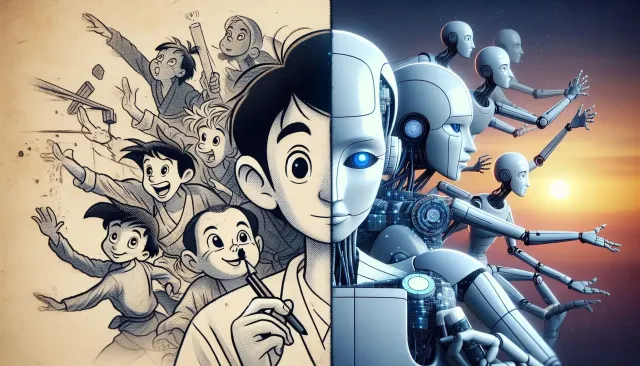
AI tools are improving every few months.
Features that seemed experimental last year are already becoming part of standard creative software today.
This rapid acceleration means studios, artists, and educators must adapt faster than ever before.
And not everyone is comfortable with that pace.
The Real Future of Animation
Despite the heated debate, many animation professionals believe the future lies somewhere in the middle.
The studios that succeed in the next decade will likely be the ones that strike the right balance:
Using AI for efficiency, while preserving human creativity for storytelling. Machines may help generate frames.
But humans will still create the characters, emotions, humor, and cultural nuance that make animation meaningful.
After all, animation has never just been about movement on a screen. It’s about bringing imagination to life.
The Algorithm Is Here, What Happens Next?
Artificial Intelligence is already shaping the animation industry.
Studios are experimenting. Independent creators are adapting. Artists are debating.
And audiences may not even realize how much the production process is changing behind the scenes.
But one thing is certain: The conversation about AI and animation is only just beginning.
The question is no longer whether AI will influence animation.
It already does.
The real question is how creators choose to use it.