Written By Damilola Durojaiye
Animation has long been seen as a space for superheroes, fairy tales, and lighthearted fun, but in recent years, that perception has shifted dramatically.
These days, animation is not just about escaping reality, it is steering real conversations, shaking up old norms, and helping push for actual social change.
Whether it is about corruption, gender equality, or climate issues, animated stories are not just putting on a show. They teach, transform , and inspire.
At its core “animation for social change” means cartoons, shorts, or series that dive right into social struggles and invite viewers to think and sometimes, act.
It is more than entertainment with pretty colors.
The stories have teeth and in Nigeria, where young people make up a huge chunk of the population, animation has found a sweet spot. It reaches kids and adults, sparking new ways to look at tough issues.
Why Animation Connects Deeply With Audiences
Why does animation hit so hard? Well… it is easy to watch, instead of long documentaries or lectures that feel like homework, animation breaks things down.
You get bright visuals, relatable characters, and gripping stories that do not lose their depth, even a child can spot fairness and honesty in a short cartoon, while older viewers get more layered messages about politics or inequality.
Animation speaks a language everyone can understand, cutting across age and background.
Nigeria’s animation scene is already hopping with socially conscious projects.
Look at “Halima’s Vote.” It does not just talk about electoral corruption and vote-buying; it also shines a light on women’s role in politics. You see it all unfold through a young girl’s eyes.
There is real power and a sense of responsibility packed into a simple story, especially when election integrity is a crazy hot topic here.
Then there is “Iwájú.” On the surface, it is a futuristic adventure set in Lagos. Dig a bit, and you will find commentary on class divides and the gap in digital access.
The story goes beyond high-tech gadgets; it shows the stark difference between rich and poor, and how tech can shape futures. Without preaching, it nudges the audience to question fairness and privilege.
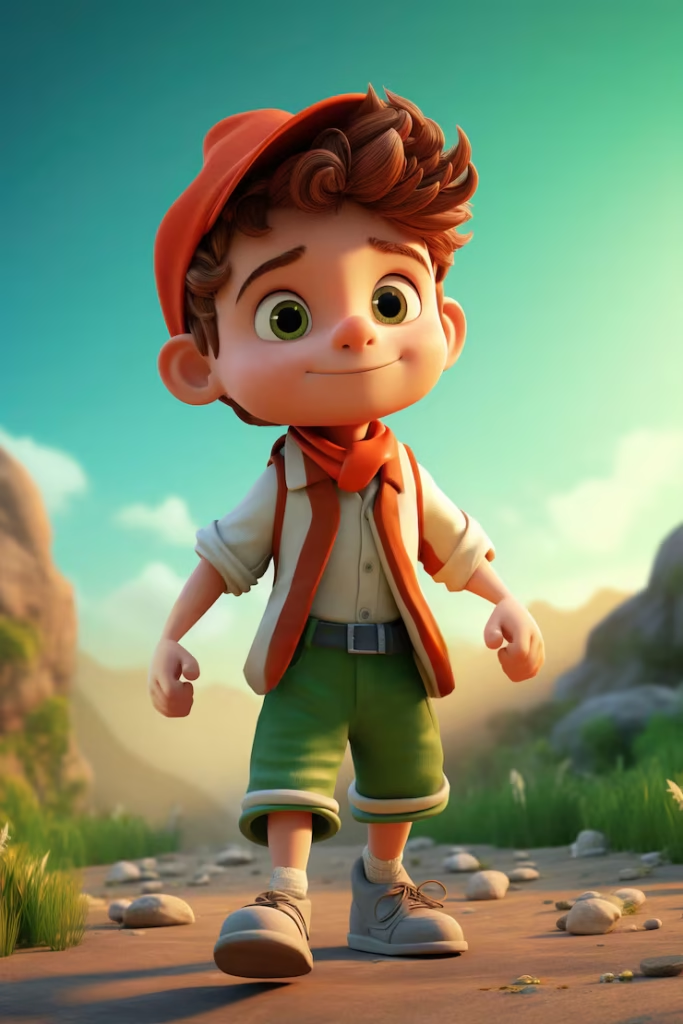
Nigerian Animation Taking on Real Issues
Animation is not just changing how we see politics or class, it is changing how girls see themselves. For years, female characters were either background noise or stuck in stereotypes.
That is changing. We have “Malika: Warrior Queen” puts a powerful female leader front and center. She is tough, smart, and resilient.
Stories like hers give young girls a real hero to look up to, it helps challenge traditional gender roles and provide young girls with role models they can look up to.
They help kick-start serious conversations about women as leaders, both on screen and in life.
Environmental themes are slowly gaining ground in Nigerian animation, too. “Kizazi Moto: Generation Fire,” an anthology that weaves together African tales about identity, tech, and nature.
The stories tackle climate change and sustainability in ways that are engaging, not overwhelming. It proves even the biggest global issues can fit into an animated adventure.
But what makes these stories stick? It is how animation draws you in. There is an emotional pull, whether it is a character you love, a scene that gets under your skin, or just clever storytelling.
The Power, The Challenges, and The Future
Animation frees creators from real-world limits, letting them show abstract feelings and wild ideas in ways that feel raw and honest. That is why it is perfect for thoughtful storytelling.
Across Nigeria and Africa, small studios, and global partnerships are making socially focused animation a thing.
Sure, the industry is still growing, but people are starting to see animation as more than entertainment.
Organizations and NGOs are also beginning to invest in animated content as a way to reach wider audiences, especially younger viewers who are more likely to engage with digital media.
Of course, it is not all smooth sailing. Money is a big problem, especially for projects that deal with social issues instead of flashy commercial stuff.
Getting the films in front of the right audience is tough without serious backing, and there is still a shortage of training and high-level production gear.
But the future looks bright. Streaming and social media open up new ways to reach people everywhere. Young Nigerian animators are mixing traditional storytelling with modern themes and bold ideas.
Each success story opens doors for more creators, slowly building a healthier animation scene.
Animation is becoming much more than entertainment, it is a tool for change, with imagination and purpose, creators shape how people think and even act.
In Nigeria, a place where talks about government, equality, and identity matter; it is a fresh and rewarding way to join the conversation.
So next time you watch an animated film or series, maybe pause for a second a ask what is the story really saying?
What is beneath the surface? because sometimes, the most powerful messages do not come from big speeches or endless debates.
They are hidden in stories, and these days, those stories are showing up in animation.