There was no massive announcement. No dramatic reveal. No global press tour.
Just a quiet shift behind the scenes.
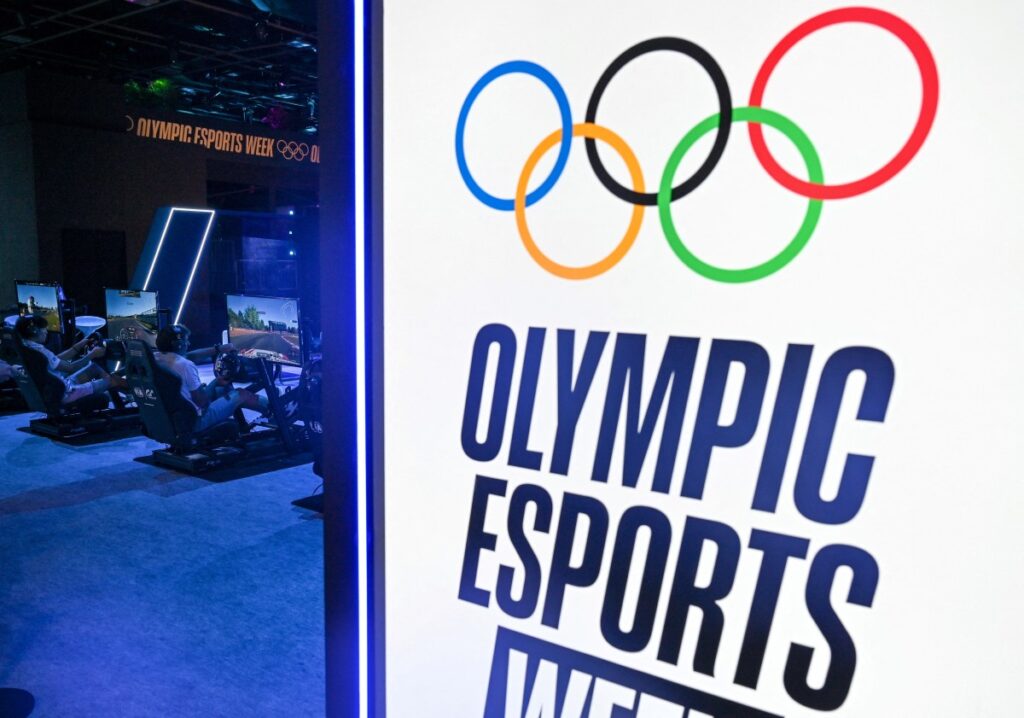
The International Olympic Committee has effectively slowed down its esports ambitions, suspending its Esports Commission and placing the Olympic Esports Games on hold under new IOC president Kirsty Coventry. To many people, it happened so quietly that it almost looked unimportant.
But in reality, this could mark one of the biggest turning points in the relationship between traditional sports and competitive gaming.
How the Olympic Esports Dream Started Falling Apart
Not too long ago, the Olympics seemed ready to fully embrace esports.
Back in 2024, former IOC president Thomas Bach publicly introduced plans for the Olympic Esports Games during the Paris Olympics period.
It was pitched as a major evolution for the Olympic movement, a chance to connect with younger audiences and step into the future of digital competition.
The IOC even secured a long-term partnership with Saudi Arabia, aiming to build a new esports ecosystem under the Olympic banner.
At first, the plan looked ambitious:
The first Olympic Esports Games were initially targeted for 2025 before later being pushed to 2027.
Then everything slowed down.
By October 2025, reports revealed that the agreement had completely collapsed. Soon after, Kirsty Coventry stepped into leadership and described the situation as a period to “pause and reflect.”
Now, that pause appears far more serious than many expected.
Multiple reports indicate the esports commission has essentially shut down operations as the IOC redirects attention toward traditional sporting priorities and financial stability.
And while the Olympics stepped back… esports didn’t wait around.
While the Olympics Hesitated, Saudi Arabia Went All In
The biggest twist in this entire story is what happened next.
After moving away from the IOC partnership, Saudi Arabia didn’t reduce its esports ambitions. It expanded them aggressively.
The country is now building one of the largest esports ecosystems in the world.
At the center of that push is the Esports World Cup, a massive tournament series set to run in Riyadh from July to August 2026.
The event features 25 tournaments across 24 major game titles and carries a staggering $75 million prize pool.
And that’s only part of the bigger strategy.
Saudi Arabia is also investing heavily in: major publisher partnerships with companies like EA, Tencent, and Ubisoft, the upcoming Esports Nations Cup, large-scale esports infrastructure, and long-term competitive gaming development.
In other words, esports no longer needs the Olympics to feel legitimate.
It is already building its own global systems.
Does Esports Even Need Olympic Validation Anymore?
For years, many people believed Olympic involvement would finally “legitimize” esports on the world stage.
The assumption was simple: if esports became part of the Olympic movement, it would gain the same respect and structure as traditional sports.
But the industry has changed rapidly.
Esports today already has:
multi-million dollar tournaments, global fanbases, streaming audiences that rival major sports broadcasts, publisher-owned leagues, sponsorship ecosystems, and international competitive structures.
And all of that exists without Olympic involvement.
The deeper issue may simply be that esports and the Olympics move at completely different speeds.
The Olympic system is built around tradition, governance, long planning cycles, and rigid structures.
Esports thrives on constant updates, internet culture, rapid innovation, community trends, and fast-moving technology.
While the IOC debated how esports should fit into Olympic values, the gaming industry kept evolving on its own terms.
That includes difficult conversations around violent game titles, monetization systems, publisher control, and governance structures, issues the Olympics has struggled to comfortably navigate.
Meanwhile, esports continued scaling globally without waiting for approval.
The Bigger Message Behind This Pause
This situation is about more than one postponed event.
It reflects a much larger shift in power.
Esports is no longer trying to prove it belongs in mainstream entertainment or sports culture. At this point, it has already built its own audience, economy, and infrastructure.
And that changes the conversation entirely.
The question is no longer:
“Can esports become part of the Olympics?”
Now the question feels more like:
“Does esports even benefit from slowing itself down to fit the Olympic model?”
Because while one side was still debating structure and tradition, the other side was already constructing the future in real time.
The Olympic pause is not a sign that esports is failing.
If anything, it highlights just how independent the industry has become.
Competitive gaming no longer relies on traditional institutions for recognition. It has created its own stars, ecosystems, fan culture, and billion-dollar economy.
The Olympics had a chance to evolve alongside that movement.
Instead, it hesitated.
And in an industry that changes almost overnight, hesitation can quickly turn into irrelevance.
Because while one side is still trying to define what esports should become…
The other side is already building what comes next.