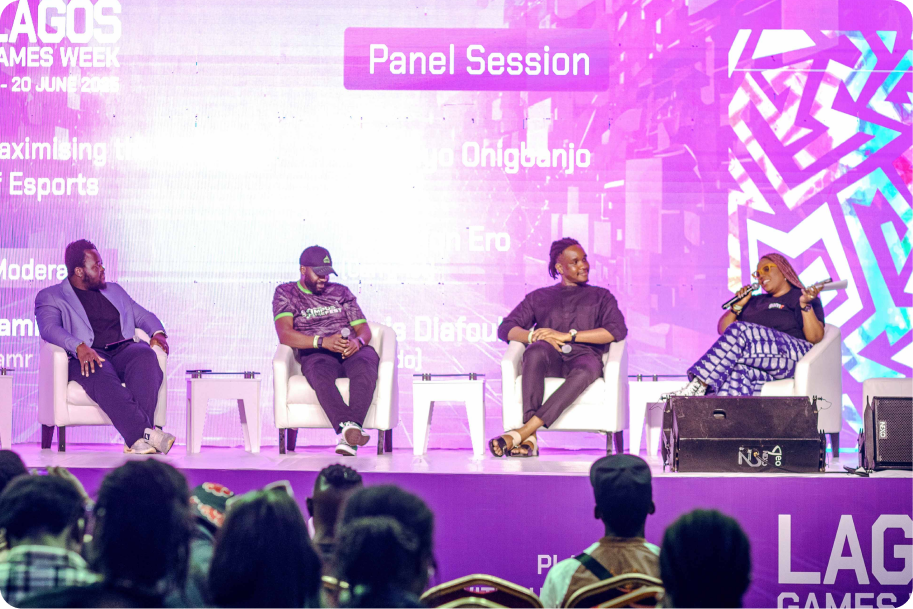
The heart of Africa’s digital revolution beat louder this week as the highly anticipated Lagos Games Week (LGW) 2026 officially took over the iconic National Theatre (the Wole Soyinka Centre for Culture and Creative Arts) in Iganmu. Running from June 18th to 19th, the third edition of the premier trade fair and gaming festival has brought together a powerhouse assembly of developers, indie publishers, esports enthusiasts, and international stakeholders.
Organized by Kucheza Gaming in partnership with the Embassy of France in Nigeria, the event has firmly established itself as the continent’s definitive launchpad for interactive media. This year’s overarching mission is incredibly ambitious: to catalyze a pipeline of globally competitive African gaming studios capable of generating $100 million in annual revenue by 2030, capturing a significant slice of the $200 billion global gaming industry value chain.
The Vision: Positioning African Creative Talent on the Global Stage
Nigeria’s tech and creative landscape is bursting with raw capability, producing over 600,000 engineering, design, and computer science graduates annually. Yet, the domestic game development industry has historically remained fragmented. Lagos Games Week 2026 aims to permanently bridge that structural gap by shifting local creators from isolated operators to primary partners on the world stage.
“We want the world to see us as partners in creating games that matter,” stated Bukola Akingbade, the visionary convener of Lagos Games Week and founder of Kucheza Gaming. “We have the talent, a highly favorable time zone, boundless creativity, and our signature Nigerian hustle mindset. What our young ecosystem needs now are scalable pipelines to learn, collaborate, and earn on a global level.”
This sentiment was mirrored by Christophe Pecot, the Cultural Attaché at the French Embassy, who highlighted how the rapidly growing video game and esports sectors serve as massive economic levers for sub-Saharan youth. By establishing structural support, the initiative provides a clear pathway toward economic stability, digital sovereignty, and cross-border IP ownership for African developers.
Inside the 2026 Tracks: Pitch Stages, Indie Benches, and Game Jams
The two-day trade fair is strictly structured around action-driven, pragmatic tracks designed to elevate every tier of the gaming community.
- The Pitch Stage & Indie Showcase: At the forefront of the exhibition floor, selected local studios have been granted free exhibition space to put their playable prototypes directly into the hands of peers, consumers, and publishers. The Pitch Stage specifically pits elite regional talent against a panel of international juries, giving teams a direct shot at securing global publishing and financing deals.
- The Pan-African Game Jam: Operating in close alignment with the global Game Jam network, a frantic, high-octane hackathon is underway. Teams of local programmers, sound designers, and concept artists are working under strict ticking clocks to build completely original games from scratch based on a surprise central theme.
- The Next Gen Summit: Delivered alongside Games for Change Africa, this key track targets secondary school students. The summit strips away the intimidation of game design, offering hands-on creative workshops to show the next generation that gaming isn’t just a casual hobby, it’s a highly lucrative, multi-disciplinary career pathway.
Global Alignment: International Giants Land in Lagos
What sets the 2026 iteration apart from a standard community meetup is the heavy presence of global industry heavyweights roaming the exhibition floors and leading panels. Representatives from titans like Xbox, Ubisoft, Focus Entertainment, and Ocean View Entertainment are actively present, participating in fireside chats, portfolio reviews, and creator engagements.
The presence of these international teams signals a massive strategic shift. Global publishers are no longer just looking at Africa as an untapped consumer market of mobile internet users; they are looking at it as an outsourcing hub for external development capacity. Local industry pillars, including Hugo Obi of Maliyo Games, highlighted that the dialogue fostered at the event is crucial for establishing the infrastructure needed to become truly “Game Ready” for global trade.
Whether you are an indie developer looking to pitch a culturally rich milestone, a casual fan looking to absorb the unique energy of African gaming culture, or a tech professional exploring the hidden economy of play, the doors are officially open.
The future of digital storytelling is being rewritten in real-time, and you can get your ticket here to experience the ultimate celebration of African game culture firsthand.