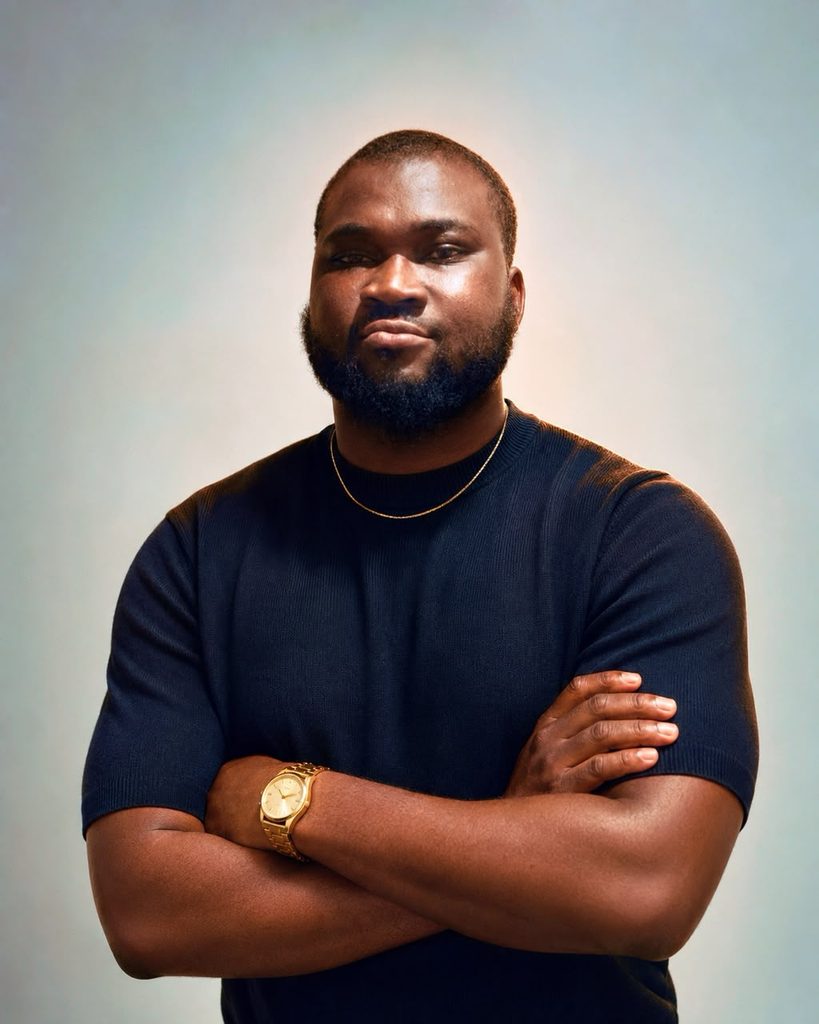
In 2014, Osas Akugbe was a young artist looking for an opportunity to sharpen his skills and understand where his interest in drawing and visual storytelling could take him. That search led him to ComicPanel and its mentorship workshops, where he crossed paths with Ayodele Elegba and began a journey that would eventually take him from learning the fundamentals of animation to becoming Managing Director of Spoof Animation.
The journey, however, was not an overnight transformation. Akugbe worked his way through the practical realities of creative production, taking on illustration, comic-page painting, animation cleanup, graphic design and background art. Those early experiences gave him an understanding of how the different pieces of a creative project come together, a foundation that continues to influence how he approaches design and branding today.
Over the years, his role evolved. From student to Head of the Colours Department in 2018, then Creative Director and eventually Managing Director, Akugbe found himself moving from creating the work to taking responsibility for the people, processes, projects and business behind it. Along the way, the mentorship he received from Elegba also shaped his own approach to developing younger creatives.
In this conversation with ComicPanel, Osas Akugbe reflects on the experiences that shaped his career, the realities of moving from artist to creative leader, and why practical experience can be just as valuable as technical skill. He discusses the challenges of managing people, translating creative identities across everything from stages and merchandise to digital platforms, and balancing creative ambition with budgets, timelines and client expectations.
He also looks ahead to his work helping creatives turn their talent into sustainable careers, Spoof Animation’s ambition to develop original intellectual properties, and the wider goal of creating African stories that can travel beyond Nigeria. For Akugbe, the journey is still unfolding.
Q: Let’s rewind to 2014. Before animation became the career path you’re known for today, what was it about the medium that caught your attention? And how did your journey eventually lead you to Ayodele Elegba and Spoof Animation?
2014 was really the beginning of a lot of things for me. I was already interested in drawing and visual storytelling, but I didn’t fully understand what a career in animation or creative work could look like. I came across Comic Panel and the mentorship workshops, and that was where I met Mr. Ayodele Elegba.
At the time, I was simply looking for an opportunity to learn and improve my art. I didn’t know that it would eventually lead to me becoming part of Spoof and, years later, becoming its Managing Director. What attracted me was the idea of using art to tell stories. Animation wasn’t just about drawing beautiful pictures for me. It was about bringing characters, worlds and ideas to life. That opportunity completely changed the direction of my career.
Q: You were part of the Comic Panel mentorship programme for six months. Looking back, what did that experience teach you about the creative industry that you might not necessarily have learned sitting in a conventional art classroom?
One of the biggest things was that it was very practical. We weren’t just learning about art we were actually making things. We were learning how to meet deadlines, work with other people, receive criticism, redo things and still deliver. It also exposed me to the business side of creativity very early.
I began to understand that being a good artist is only one part of being a professional creative. You have to understand communication, teamwork, discipline, storytelling and eventually how to turn your creativity into something sustainable. I think that practical exposure prepared me for the real world in a way that simply learning techniques wouldn’t have.
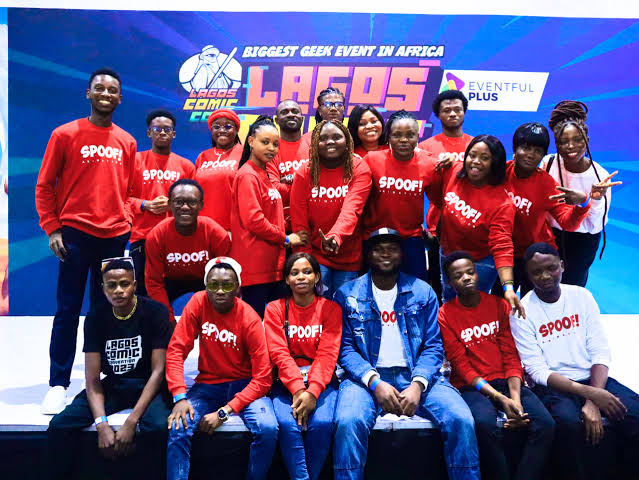
Q: Your early work involved everything from inking and cleanup to background illustration. How did those foundational, hands-on experiences shape the way you approach visual storytelling and design today?
A lot. When you’ve actually worked from the bottom of a production pipeline, you understand how every creative decision affects the next person. Doing Illustration, Painting Comic Pages, Cleaning up animation, Design Graphics and Background art taught me to pay attention to details, but more importantly, it taught me how images are constructed.
So when I’m looking at branding today, I’m not only thinking, “Does this look good?” I’m thinking about how it will work on a stage, on a screen, on a T-shirt, on social media, on a banner, or even when someone sees it from a distance or at first glance. That foundation still influences how I design because I understand the practical side of making things, not just the conceptual side.
Q: You’ve gone from being a student to becoming Creative Director and eventually Managing Director. What were the biggest adjustments you had to make at each stage of that progression?
I don’t think there was one particular day where I suddenly became a leader. It happened gradually. I started as someone who wanted to become better at art. Then I started taking responsibility for parts of projects. Eventually, people started looking to me for creative decisions, and that naturally moved me into Creative Direction. I became head of Colors Department at Spoof in 2018 and that was one of the first tough leadership roles I handled. Thanks to my good mentor and Boss he helped guide me to not just be a good leader but to also be a good service to the people I was leading. I enjoyed the act of teaching my subordinate and seeing them grow. Learned that from Mr Elegba. The transition to Managing Director was different because now the responsibility wasn’t just about whether my own work was good. I became responsible for helping the entire organization move forward, the people, the projects, the clients, the creative quality and the business. That was when I really understood that leadership means creating an environment where other people can do their best work.
Q: There’s a significant difference between being responsible for your own creative work and being accountable for an entire studio’s output, deadlines, and people. What did that transition teach you about leadership?
Everything becomes bigger. When you’re an artist, you can focus on your own task. If something isn’t working, you fix your part. As an MD, if something isn’t working, you have to ask why. Is it a people problem? A process problem? A communication problem? A budget problem? A timeline problem? You also realize that your decisions affect other people’s careers and livelihoods. That’s probably one of the biggest changes for me. You become less concerned about proving that you can do the work yourself and more concerned about building a team that can consistently produce great work.
Q: Ayodele Elegba played a mentoring role in your own development, and you’re now in a position to influence younger creatives yourself. How intentional are you about continuing that culture of mentorship within Spoof?
For me, mentorship is one of the biggest things I inherited from that journey. Someone gave me an opportunity when I was starting out, and I think the best way to honour that is to create opportunities for other people. That’s part of why Spoof has continued to invest in young creatives and apprenticeship programmes. I don’t want people to only come into the studio and learn how to animate. I want them to understand how the creative industry works. If someone leaves Spoof with better skills, better discipline, a better understanding of the industry and the confidence to build a career, then we’ve done something meaningful.
Q: When you were starting out as an illustrator, what part of the creative profession did you find most difficult to navigate and what do you wish someone had warned you about then?
People don’t really warn you about how much of leadership is. You can learn design. You can learn animation. You can learn software. But managing different personalities, expectations, ambitions and problems is a completely different skill. Sometimes the hardest decision isn’t the creative decision. It’s deciding what is best for the team, the project and the company at the same time. And sometimes you have to make decisions that aren’t necessarily what you personally want.
Q: When Spoof takes on the visual identity for an event or project, what happens after the main creative direction has been established? How do you translate that identity into things like stage design, merchandise, social media graphics, and other physical and digital touchpoints?
Once the core identity is established, you have to build a system around it. We start thinking about all the places the identity needs to exist. The stage is different from Instagram. Instagram is different from a T-shirt. A banner is different from a ticket or an accreditation material. So you establish the core elements typography, colours, graphic language, imagery and layout principles and then adapt them to each medium. That’s where having a strong design system becomes important.
Q: As Managing Director, your decisions now have to account for more than creative quality. How do you navigate situations where your creative vision has to meet practical realities such as budgets, deadlines, client expectations, or sponsorship requirements?
Definitely. As a Creative Director, you’re primarily asking, “How can we make this as good as possible?” As an MD, you still ask that question, but you also have to ask, “Can we actually execute this? How much will it cost? How long will it take? What else is happening? What does this mean for the team?” You have to balance ambition with reality. But I don’t see those constraints as necessarily bad for creativity. Sometimes constraints force you to think more intelligently.
Q: If a young artist discovered your story today from entering the industry as a student to eventually leading the studio, what would you want them to understand about the journey that isn’t obvious from the outside?
I want them to understand that where you start doesn’t necessarily determine where you end up. When I started, I was just a young artist trying to learn. I didn’t have a clear picture that I would eventually become Creative Director or Managing Director. So I would say take the opportunities in front of you seriously. Learn.Work. Ask questions.
Be willing to start from the bottom. And don’t underestimate the value of being useful. Sometimes your first opportunity isn’t glamorous. You might be doing Animation, colors, cleanup, background art, assisting someone or doing something that doesn’t feel important. But if you approach every stage as an opportunity to learn, those experiences eventually become your foundation.
Q: What’s next for you and for Spoof beyond LCC 2026?
For me personally, I want to continue growing beyond just being an artist. I’m interested in the intersection between creativity and business helping creatives understand that their talent can become something sustainable.
I have got a program I run currently that helps creative transition from being a talent to now being a business oriented creative. I also do one on one sessions too and it helped a lot of people and myself and I got a webinar happening October 17 where I guild my community on how to get Client and Opportunities as a Creative.
For Spoof, the goal is to continue building a stronger animation studio and creating original intellectual properties that can compete beyond Nigeria. We want to tell African stories, but we also want those stories to travel. And personally, I want to keep creating, directing, mentoring and building systems that allow other creatives to grow. I think I’m still very much on the journey.