MTN, Ashesi University and Leti Arts sign a university game lab deal at the MTN Gaming Conference in Accra, alongside a national challenge to find emerging developers.
There are plenty of young people with the ideas and skills to build original video games, but turning those ideas into finished products requires more than talent. Access to the right tools, industry guidance, structured training and opportunities to test games with real users can determine whether a promising concept remains a personal project or develops into something commercially viable.
Now imagine having access to professional tools, experienced mentors, a university programme and a possible route to getting your game into the hands of real users.
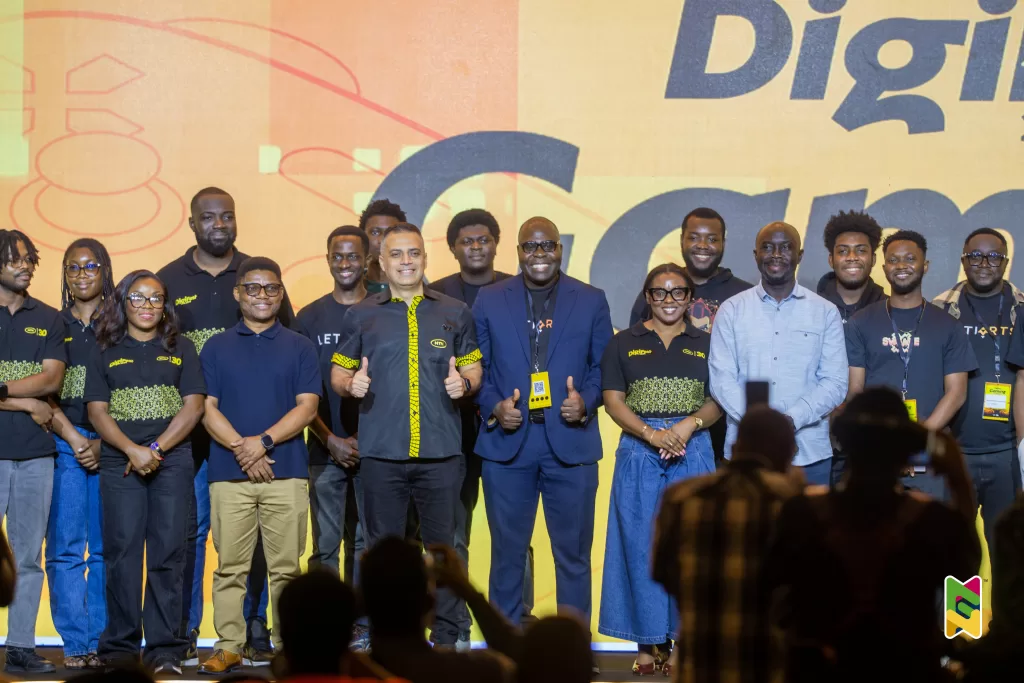
That is the opportunity behind the partnership involving MTN Ghana, Ashesi University, Accra-based game studio Leti Arts and MiTale. Announced at the MTN Gaming Conference in Accra on October 1, 2026, the initiative will establish the Ashesi Gaming and Applied Games Virtual Lab, while a separate developer challenge aims to help emerging Ghanaian creators turn their projects into commercially viable games.
At first glance, it sounds like another technology partnership. But look closer, and it addresses one of the biggest questions facing African gaming: what happens after someone learns to make a game?
Getting the skills is one thing. Finding mentors, testing a product, securing support and reaching players are entirely different challenges.
This partnership is an attempt to connect those stages.
The first important detail is that the new lab is not being designed solely around entertainment.
According to Ashesi University, the initiative will explore how game design and gamification can be applied to fields including agriculture and education. Students from different disciplines will be able to work together, bringing technology, business, nutrition, health and social sciences into projects built around real-world problems.
Think about what that could look like. A student might develop an interactive learning experience that makes a difficult classroom subject easier to understand.
Another team could explore a simulation that teaches farming decisions or helps users understand a practical process through challenges and rewards.
These are examples of the kinds of applications the lab could explore, rather than confirmed projects already under development.
Ashesi Provost Professor Angela Owusu-Ansah explained that gamified learning can move students beyond passive instruction, giving them opportunities to apply ideas through challenges and simulations.
The bigger idea is to treat games as more than something people play after school or work. Game mechanics can also become tools for teaching, experimentation and problem-solving.
And that creates opportunities for people who might never have considered a career in conventional video game development.
One of the most interesting parts of the initiative is the attempt to bring game development closer to formal education.
Ashesi says the lab will build on its existing nine-week Applied Games and Gamification course, supported through the Nkabom Collaborative. The course is expected to serve as one of the main routes through which students access the lab.
This matters because game development requires a combination of skills.
Someone might be good at coding but struggle with game design. Another person might have brilliant ideas for characters and stories but need help turning them into playable experiences. A successful project can also require visual design, sound, user testing, business planning and an understanding of the audience.
A university environment can bring some of those disciplines together. The industry partnership, meanwhile, can help students understand what happens when a classroom project needs to become a product people can actually use.
The plan is for students to develop concepts and prototypes, receive mentorship, test their work with users and refine their ideas. Promising projects could then move into incubation, with opportunities to explore commercial development.
There is an important qualification, however: the lab is starting virtually. A physical facility for gaming, simulation, applied research and interactive technologies is part of its longer-term vision, not something the university has announced as already operational.
That distinction matters because the real test will be what students can access, build and achieve through the programme over time.
Leti Arts Knows the Gap It Wants to Close
For Leti Arts, this partnership connects with a problem the studio has encountered throughout its own journey.
Founded in 2009 by Eyram Tawiah and Wesley Kirinya, Leti Arts develops interactive media inspired by African history, folklore and contemporary culture. Its work spans games and digital comics, with operations in Accra and Nairobi.
The studio has spent years developing African stories into interactive experiences rather than treating local culture as something that belongs only in books, films or museums.
Its game Karmzah, for example, draws on African lore and features a superhero whose story incorporates disability representation. Another project, Sweave, transforms Ghanaian Kente patterns and heritage into an interactive mobile experience. Leti Arts showcased both projects at the MTN Gaming Conference.
That background makes the new partnership particularly interesting. Leti Arts is not simply helping students learn to build games; it is bringing experience from a studio that has spent years navigating the challenge of creating and commercialising African-inspired interactive content.
The company has also described its own early experience as one in which creators often had to teach themselves, work with limited mentorship and navigate fragmented tools. Its goal with the new lab is to make the route from learning to production more structured for the next generation.
For emerging developers, that could mean learning not only how to make a game work, but how to improve it, present it to potential partners and think about who will eventually play it.
The Other Big Question: Who Will Actually Play These Games?
Here is where MTN’s involvement becomes especially relevant.
A game can be beautifully designed and technically impressive, but it still needs an audience. Developers must find ways to distribute their work, attract players and generate enough revenue or support to keep developing.
At the conference, MTN Ghana CEO Stephen Blewett identified access to buyers as a challenge for local developers, asking where creators could sell their games once they had built them. The company has positioned its participation as part of a wider effort to connect developers with the technology, platforms and commercial opportunities needed to grow.
MTN’s role could therefore extend beyond supporting a training initiative. Its telecommunications infrastructure and reach could potentially help create connections between game developers and larger audiences, although specific distribution arrangements for individual student projects have not been guaranteed.
That is a crucial distinction.Training developers is useful. Helping them find players is what can turn that training into a business.
The long-term value of the partnership will depend on whether it creates a practical path from an idea to a playable product, and from that product to users who want it.
The university lab is only part of the wider push.
The MTN DigiFest Game Developer Contest offers a separate opportunity for university students, independent developers, studios and game development communities in Ghana to submit original projects. Participants can enter individually or in teams of up to three.
The contest has two categories: University and Community. Projects will be assessed on user interface and experience, code quality, gameplay, originality and potential for further development and commercialisation.
Shortlisted entrants will be invited to demonstrate and defend their projects before judges at an in-person audition at Kwame Nkrumah University of Science and Technology (KNUST).
The contest opened on August 24 and is scheduled to close on October 19, 2026. The overall winning project may also receive additional support, including technical mentorship, product guidance, quality assurance and help preparing for hosting or publication, subject to the necessary approvals.
That makes the opportunity relevant beyond students already enrolled at Ashesi. An independent creator or small team with a working game could also have a route to get its work evaluated.
Interested developers can review the official MTN DigiFest Game Developer Contest details.
What This Could Mean for African Gaming
The African gaming conversation often focuses on how many people play games, the popularity of mobile entertainment or the potential size of the market.
But a growing audience does not automatically produce a thriving local development industry.
For that to happen, creators need the skills to build games, opportunities to collaborate, support to improve their products and routes to the people who will play them. They also need ways to retain ownership of original ideas and build businesses around their work.
The Ashesi lab, the Leti Arts partnership and the MTN developer contest approach different parts of that challenge. One focuses on learning and applied research; another creates a competition and support pathway for developers; the wider partnership aims to bring education and industry closer together.
There is still a lot to prove. The lab’s long-term impact will depend on the quality of its programmes, the projects students produce, the opportunities available to developers and whether promising ideas can survive beyond a showcase or competition.
But the ambition is worth paying attention to: building an environment where young African developers are not left to figure out every stage of the journey alone.
Because the next successful African game might begin in a university classroom, a small independent studio or on someone’s laptop at home.
The important question is whether the people behind that idea will have a path to take it further.
What do you think African game developers need most right now: better training, funding, publishing opportunities or access to players? Tell us in the comments, and follow Comicpanel for more stories on African gaming, animation, comics and creative technology.