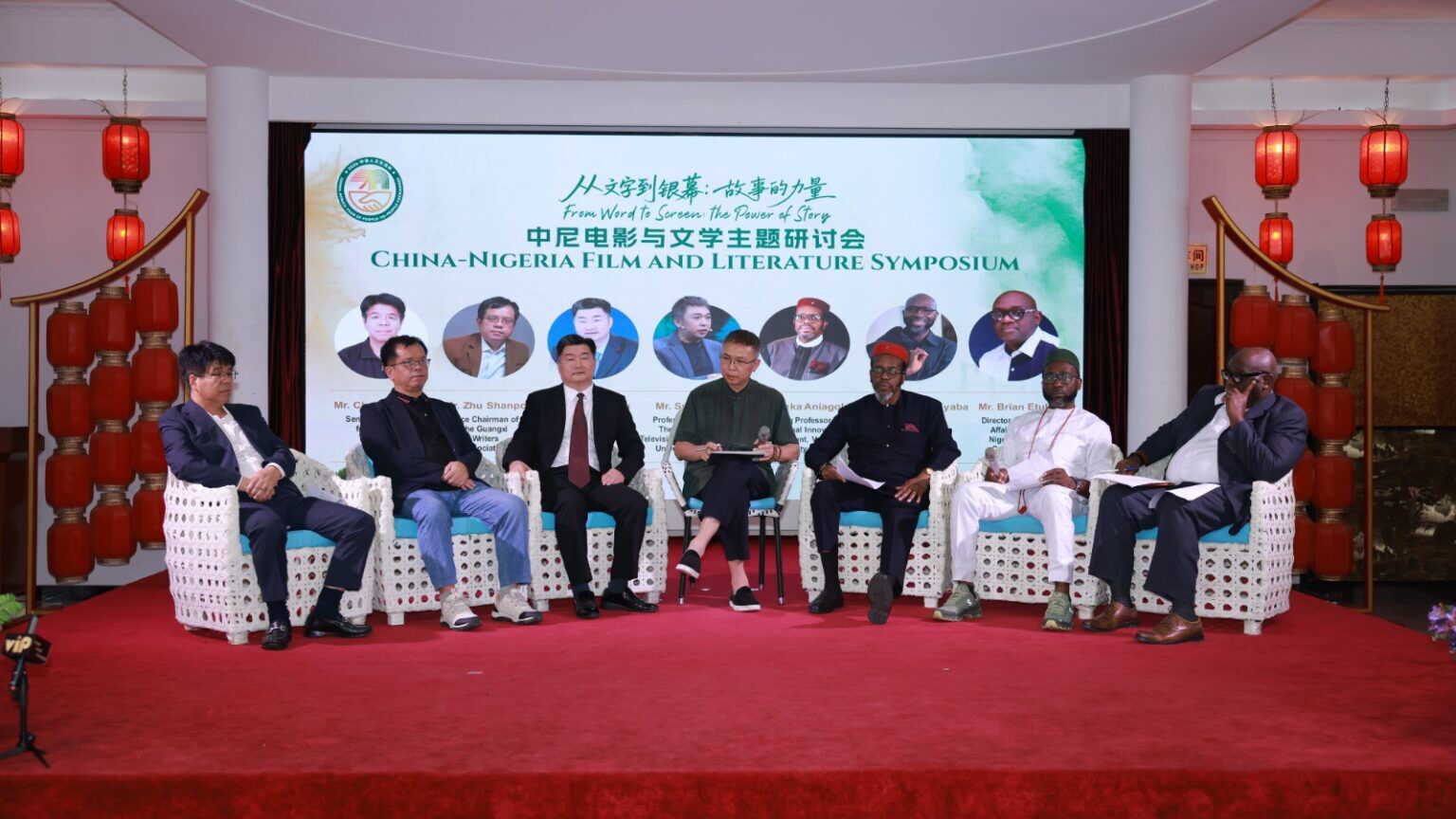
Things are moving fast in the global entertainment market, and Nigeria’s creative economy just took a massive step onto the global stage. The Nigerian Television Authority and the China Movie Channel signed a historic strategic agreement in Abuja. Sealed at the China-Nigeria Film and Literature Symposium inside the China Cultural Centre, this deal bridges two of the world’s largest content powerhouses. The initiative focuses on direct film co-productions, high-end broadcasting content exchanges, tech transfers, and global distribution deals designed to put African cinema on screens across China and vice versa.
Inside the hall, top diplomats, Nollywood filmmakers, government officials, and broadcasting executives gathered for what was far from your average photo-op. The timing is intentional, as this pact lands right as Nigeria and China mark fifty-five years of diplomatic relations and step into the China-Africa Year of People-to-People Exchanges. Chinese Ambassador to Nigeria Yu Dunhai stood before the room and laid down the raw numbers driving this partnership. China currently operates over ninety-three thousand cinema screens and rolls out roughly seven hundred theatrical features every single year. At the same time, Nollywood churns out more than two thousand movies annually, maintaining its reign as the second-largest film production industry on earth by volume. When you marry Nollywood’s relentless storytelling speed with China’s massive exhibition infrastructure and technical gear, the potential for expansion is huge.
Rather than relying on vague diplomatic promises, the agreement targets practical, commercial infrastructure for creators. Under the terms, Nigerian and Chinese studios can now co-finance and co-produce film and TV features with clear pathways to release in both territories. The Nigerian Television Authority and China Movie Channel will syndicate TV shows, documentaries, and feature films across their domestic networks. On the technical side, Nigerian crews gain direct access to advanced digital cinematography tools, virtual production setups, and post-production software workflows from Chinese studios. Professional exchange programs will also allow broadcasters, writers, directors, and camera operators to participate in bilateral residencies to sharpen their technical skills. Nigerian Television Authority Director-General Salihu Dembos cut straight to the chase during his address, insisting this cannot be a deal that sits in a file cabinet collecting dust. He called for immediate, high-quality joint productions and clear technical benchmarks so local creators feel the impact on set right away.
The symposium also highlighted a rich history of literary cross-pollination. Ambassador Yu pointed out that classic Nigerian literary works by icons like Wole Soyinka, Chinua Achebe, and Chimamanda Ngozi Adichie are already translated and widely read across China. On the flip side, translated Chinese web novels and online literature are blowing up among younger readers in Nigeria. To top off the signing, participants sat down for an exclusive screening of the Chinese action feature The Valiant One, showcasing the latest advancements in stunt choreography and digital camera work happening in Asian cinema today. Dr. Mukhtar Yawale Muhammad, representing the Federal Ministry of Arts, Culture, Tourism, and the Creative Economy, framed the deal as a direct engine for job creation and revenue. The primary goal is turning cultural expression into an economic engine that employs young animators, editors, writers, and sound engineers across Nigeria.
To fully understand why this partnership matters, you have to look at how past bilateral agreements operated. For decades, media partnerships between foreign governments and African broadcasters were mostly one-sided. Overseas networks would license older foreign shows or documentaries to local television stations for cheap broadcast filler, offering very little in terms of financial investment, co-ownership, or skill building for local crews. This new pact changes that dynamic by treating Nollywood as an equal production partner rather than just an audience for foreign re-runs. By focusing on co-ownership and joint financial backing, Nigerian producers retain a stake in the content they create, opening up real revenue streams from international distribution.
For independent Nollywood producers and ground-level crew members, the practical benefits of this deal hit where it counts most. Funding independent films in Nigeria has always been a battle, forcing many creators to rely on personal savings, private loans, or limited streaming platform pre-sales. Co-production framework agreements allow local filmmakers to pitch directly to Chinese distribution houses and equity funds that are backed by established exhibition networks. A Nigerian director with a compelling script can now secure partial Chinese financing in exchange for theatrical access in Asia. On set, local camera operators, lighting technicians, and sound engineers get hands-on experience working alongside international crews who use high-end digital cine cameras and LED volume stages. This practical training upgrades the technical standard of Nigerian cinema from the ground up, making local productions far more competitive on global streaming platforms.
Reaction across local film guilds and creative associations has been cautious yet optimistic. Directors, screenwriters, and cinematographers have spent years pointing out that Nollywood’s biggest hurdle isn’t a lack of talent or good stories, but the high cost of cinema-grade production equipment and post-production facilities. Local industry leaders emphasize that if the technology transfer aspect of this deal is executed correctly, it could dramatically reduce post-production costs for local films. Instead of flying crews to Europe or South Africa for complex color grading, visual effects, and sound mixing, Nigerian studios could build out domestic post-production suites using equipment and workflows imported through this partnership.
If you have been following the business side of African entertainment, you know distribution has always been the ultimate bottleneck. Having access to high-end cameras and massive budgets does not mean much if your movie cannot get screened in major international theaters. This agreement lays down the tracks for Nigerian filmmakers to tap into an overseas market of over a billion viewers without relying solely on Western streaming algorithms. At the same time, it gives local crews hands-on access to heavy-duty studio tech and virtual production techniques that usually cost a fortune to import independently. As implementation kicks off, expect to see joint film projects, technical workshops, and fresh content hit the airwaves fast.