Fifteen years after 300 people gathered around an idea, the question is no longer whether Lagos Comic Con has survived. The harder question is whether Nigeria still needs it.
There is a particular kind of fatigue that comes with longevity. The first few years of anything feel exciting. The tenth anniversary feels historic. But somewhere after that, familiarity begins to work against you.
People start asking questions.
Haven’t we seen this before?
What is actually new?
Why should I pay to attend another convention?
What am I going to get from exhibiting there that I can’t get online?
Why should a creator who already has Instagram, TikTok, YouTube, X, LinkedIn and a global audience bother travelling across Lagos to stand in a hall for a day?
And perhaps the most uncomfortable question of all:
Does Lagos Comic Con still matter?
It is a fair question. In 2012, when the Lagos Comic Convention began, Nigeria’s creative economy looked dramatically different. A comic creator could have talent and still struggle to find an audience. An animator could spend years developing a portfolio without ever meeting the right producer. A cosplayer was more likely to be treated as someone playing dress-up than as a creative professional. Gaming communities existed, but they were fragmented. African intellectual property was still fighting for cultural legitimacy.
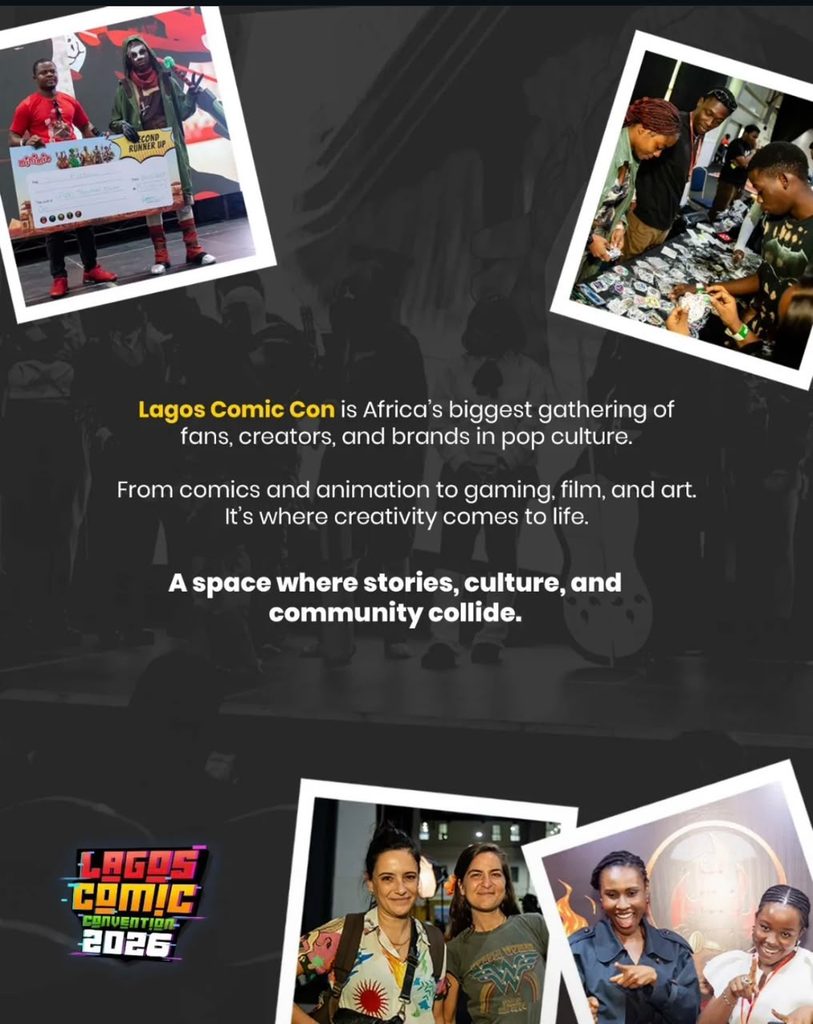
The first Lagos Comic Con reportedly drew about 300 people. Today, the organisers describe the 2026 edition as the convention’s 15th edition, with more than 7,000 attendees, over 100 creators and speakers, 200-plus exhibitors and representation from more than 10 countries.
That growth is impressive. But attendance alone cannot settle the argument.
A large crowd does not automatically make an event culturally important. A sold-out concert can still be forgettable. A conference can have thousands of people in a room and produce almost nothing afterwards. So the real test for Lagos Comic Con is not:
“How many people come?”
It is:
“What happens because people came?”
And that is where the debate becomes much more interesting.
The Argument About Lagos Comic Con
Let’s start with the critics.
Because pretending that every complaint about Lagos Comic Con is simply negativity would weaken the case for its relevance. There are legitimate reasons for creators, exhibitors and fans to question whether the convention still delivers enough value.
The Nigerian creative ecosystem has changed. There are now animation festivals, gaming events, film festivals, literary festivals, art fairs, tech conferences, creator communities, online marketplaces, social media platforms and private networking circles that did not exist or were not nearly as developed when LCC began.
A young illustrator in Lagos today can publish directly to thousands of people.
An animator can put a reel on Instagram and attract an international client.
A comic creator can distribute digitally.
A game developer can build a global community without waiting for a convention.
A filmmaker can premiere work online.
A cosplayer can build an audience without ever entering a convention hall.
So the old argument that “you need Comic Con to find an audience” no longer holds as strongly as it once did.
Then there is the question of cost.The criticism became particularly visible around the 2025 edition.
A post-event report by The African Comics Empire documented complaints from attendees, exhibitors, vendors and panelists around ticket prices, exhibition costs, organisation, scheduling and communication. One vendor told the publication that several studios stayed away because exhibition stands were considered too expensive, while other exhibitors questioned their commercial returns.
Those criticisms matter. If a small creative business spends significant money on a booth, it is reasonable to ask what it gets back.
If a young artist spends money on transportation, food and admission, it is reasonable to ask what opportunity awaits them beyond photographs and entertainment.
If an industry professional travels across Lagos to participate in a panel, it is reasonable to expect competent scheduling and communication.
And if an event has been around for 15 editions, it should be held to a higher standard than an emerging community gathering. Longevity creates responsibility.
So yes, Lagos Comic Con has things to fix. But that is not the same thing as saying it has become irrelevant. In fact, the criticism may reveal precisely why it remains important.
The First Reason: Nigeria Still Needs A Physical Creative Marketplace
The internet has made discovery easier. It has not made community unnecessary. This distinction is crucial.
A creator can discover another creator online. But an online connection is not always the same thing as sitting across a table from someone, looking at their work, discussing an idea and deciding to collaborate.
Lagos Comic Con was originally conceived as a marketplace and meeting point connecting comics with animation, film, gaming, merchandising and related creative fields. Its own historical description identifies the convention as a platform for exchanging ideas and business opportunities.
That original proposition remains surprisingly relevant. Because Nigeria’s creative industries do not operate in neat boxes.
A comic creator needs an animator.
An animator needs a writer.
A writer needs an illustrator.
An illustrator may need a publisher.
A publisher needs an audience.
A game developer needs artists.
A filmmaker may need a comic IP.
An investor needs to discover projects.
And an audience needs to know what Nigerian creators are actually building.
Online platforms can connect these people.
A convention can put them in the same room.
That physical collision is difficult to replicate digitally.
The Second Reason: The Creative Industry Needs Discovery, Not Just Content
There is a strange paradox in the Nigerian creative economy. There has never been more content.
But finding the right people remains difficult. Every day, thousands of posts compete for attention. A brilliant artist can disappear beneath an algorithm. A promising studio can have an impressive Instagram page and still struggle to find investors.
A young creator can have 20,000 followers but no business model. This is where a convention can perform a function that social media cannot easily perform:
Lagos Comic Con puts a physical boundary around a particular ecosystem. For one day, instead of searching through thousands of accounts, people can walk through a concentrated environment of creators, studios, publishers, gamers, cosplayers, filmmakers, artists and fans.
The current LCC platform describes its ecosystem as bringing together creators, fans, innovators, storytellers, gamers, filmmakers, publishers and pop-culture enthusiasts. Not because everything inside the building is automatically excellent. But because discovery requires proximity.
The Third Reason: It Gives Nigerian Ip A Place To Be Seen As Ip
This may be one of Lagos Comic Con’s most important contributions. Nigeria has historically been very good at consuming global pop culture.
Marvel.
DC.
Anime.
Manga.
Disney.
Hollywood.
Korean entertainment.
Japanese gaming.
But the long-term creative economy cannot survive entirely on consuming other people’s intellectual property. At some point, Nigerian creators have to build worlds of their own.
That means characters.
Stories.
Comics.
Games.
Animation.
Merchandise.
Cosplay.
Books.
Films.
Lagos Comic Con creates a physical environment where those things can be presented together. And that matters.
Because a character stops being merely a drawing when people begin recognising it. A comic stops being merely a PDF when readers can hold it.

A game becomes more than a prototype when people gather around it. A costume becomes something bigger than fabric when a community recognises the character underneath it.
This is part of the reason cosplay itself deserves more serious attention. LCC’s current cosplay programme includes competitions, judging, prizes and creator recognition, while its broader history shows cosplay developing from a niche activity into a major convention attraction.
That is cultural infrastructure. It may look like entertainment. But culture often begins as entertainment before an industry learns how to monetise it.
The Fourth Reason: The People Who Think They Have Outgrown LCC May Be The Very People Who Need It Most
This is where the argument gets uncomfortable. Some established creators may genuinely have outgrown the convention.
And that is okay.
If you already have international distribution, established investors, a strong fan base and reliable business networks, you may not need Lagos Comic Con in the same way a first-time creator does.
But that does not mean the platform has become irrelevant. It means your relationship with the platform should change. The beginner goes to discover. The emerging creator goes to connect. The established creator goes to recruit, collaborate, scout talent, launch IP, build community or give back.
The studio goes to find audiences.
The publisher goes to find creators.
The investor goes to find opportunities.
The fan goes because they love the culture.
The brand goes because the audience exists.
The media goes because there are stories.
That is how a mature ecosystem works. Not everyone should receive the same value from the same event.
But Here Is Where Lagos Comic Con Must Be Challenged
There is a danger in turning history into entitlement. Fifteen years of existence does not automatically earn another fifteen.
The creative industry owes Lagos Comic Con nothing simply because it was there first. This is perhaps the most important part of the debate.
Legacy is an asset. It is not immunity. The 2025 criticism should therefore not be dismissed. If exhibitors feel the cost of participation outweighs the return, LCC needs to listen.
If creators complain about programming, it needs to improve.
If professionals feel panels are repetitive, the programming needs to become sharper.
If visitors say the experience feels too familiar, the convention needs to innovate.
If young creators cannot afford to participate, accessibility has to become part of the conversation. And if the event wants to call itself a platform for the creative economy, it must increasingly demonstrate measurable economic value not simply cultural excitement.
This is where the question of “something fresher” becomes legitimate. Nigeria absolutely needs fresh platforms.
But freshness alone is not the same thing as progress. A new event can be exciting for two years.
The harder job is building an institution that survives fifteen.
Fresh Does Not Always Mean New
This is perhaps the biggest misconception in the argument against LCC. The creative industry sometimes mistakes novelty for innovation.
A new venue is not automatically innovation.
A new logo is not innovation.
A different celebrity lineup is not innovation.
A new event name is not innovation.
Innovation is when the experience produces something the old model could not.
Lagos Comic Con therefore does not necessarily need to become a completely different event.
It needs to become a better version of what only it can be.
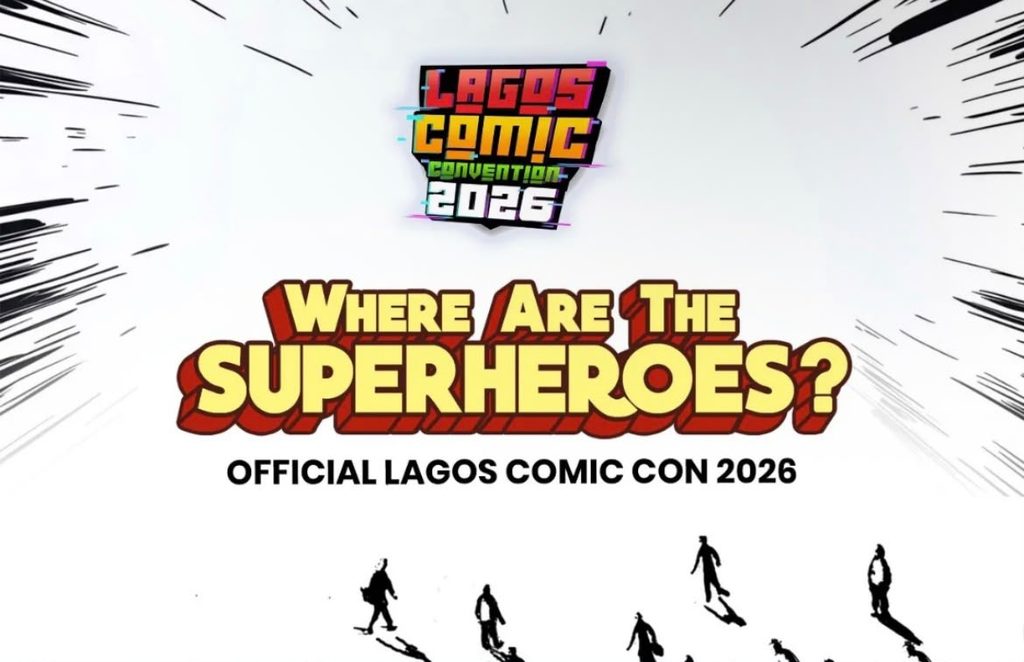
The 2026 edition’s theme “Where Are The Superheroes?” attempts to shift attention away from fictional superheroes toward the creators, innovators, companies and communities shaping African creativity.
That is potentially a more interesting direction. Because after 15 editions, perhaps the question should no longer be:
“Who is your favourite superhero?”
It should be:
“Who is building the next African creative empire?”
The Fifth Reason: LCC Is Now Part Of The History It Once Existed To Document
There is another argument that cannot be reduced to attendance statistics. Lagos Comic Con has been around long enough to become an archive of Nigeria’s creative evolution.
The event has watched comics move from the margins. It has watched animation become increasingly commercial.
It has watched gaming communities grow. It has watched cosplay become more visible. It has watched African stories become increasingly valuable internationally.
Academic research on the Nigerian animation industry has also identified Lagos Comic Con as an important platform for exhibitions, networking, capacity building, fan development and industry conversations, noting its growth from roughly 300 attendees in 2012 to more than 6,000 in later editions.
That history matters. Because industries do not emerge overnight.They leave traces.
People meet. Projects are discussed. Ideas are tested.
Creators find confidence. Fans become creators. Creators become employers. Employers create jobs.
And eventually, someone looks backwards and realises that what seemed like a small gathering was actually part of the infrastructure that helped an industry grow. That is the real value of a cultural institution.
But Does That Mean Everyone Should Attend?
No. And this is where an honest defence of Lagos Comic Con must differ from propaganda. Not everybody needs to attend.
If you have no interest in comics, animation, gaming, film, books, cosplay, pop culture or creative business, LCC may not be for you.
If your business cannot justify the cost of exhibiting, don’t exhibit simply because everybody else is doing it. If you are an established creator and another event gives you significantly better commercial opportunities, go there.
If you attended last year and got nothing from it, you have every right to demand a better experience—or spend your money elsewhere.
A healthy creative ecosystem should have alternatives. Lagos Comic Con should not be the only door.
Its relevance should come from being a valuable door not from being the only door.
So, Why Should An Exhibitor Still Care?
Because an exhibition booth is not supposed to be a decorated storage space.
It is supposed to be a business tool.
LCC’s exhibition proposition has historically included exposure, networking with entrepreneurs and SMEs, access to a young creative audience, media opportunities and opportunities to interact with other players beyond comics and animation.
But exhibitors have to use that opportunity intelligently. Don’t come simply to sell merchandise. Come with a launch
Come with a new character. Come with a pitch. Come with a prototype. Come looking for collaborators. Come looking for talent.
Come prepared to capture customer data. Come with something people cannot experience from your Instagram page.
Otherwise, the criticism that “I can do this online” becomes legitimate. The convention cannot create value for an exhibitor who arrives without a strategy. But equally, the convention has a responsibility to make that strategy possible.
And Why Should A Creator Attend?
Because creative careers are not built exclusively from followers. They are built from relationships.
The person sitting beside you may become your collaborator. The stranger asking about your comic may become your first paying customer. The animator you meet may eventually join your studio.
The publisher you pitch may remember you two years later. The panel you attend may change the way you approach your business.
And occasionally, the person you did not know you needed to meet is standing three metres away from you. You cannot algorithm your way into every relationship.
The Biggest Value May Actually Be The Next Generation
Perhaps the strongest argument for LCC is not what it does for established professionals. It is what it does for the young person who has never seen people like themselves take their imagination seriously.
A 15-year-old who walks into a convention and sees Nigerian artists selling comics may suddenly understand that drawing can be more than a hobby.
A teenager watching a cosplayer on stage may discover costume design. A young gamer may meet a developer.
An aspiring animator may discover that Nigerian studios actually exist. A writer may meet an illustrator.
That psychological shift is difficult to measure. But it is how industries reproduce themselves.
The convention becomes a bridge between “I like this” and “I can build a career from this.” That bridge is still necessary.
The Real Question Is Not Whether LCC Should Change
It absolutely should. The real question is:
What should it change without losing what made it matter?
Because there is a trap on both sides.
One side says:
“It has been around for 15 years, therefore it must be good.”
That is lazy thinking.
The other says:
“It has been around for 15 years, therefore it is old.”
That is equally lazy.
Age is neither proof of relevance nor proof of irrelevance. The test is usefulness.
And Lagos Comic Con still occupies a peculiar position in Nigeria’s creative landscape because it is not simply a comic event anymore.
It has become a meeting point between several creative economies. Comics meet animation.
Animation meets film. Film meets gaming. Gaming meets technology. Cosplay meets fashion. Publishing meets IP.
Creators meet fans. Businesses meet audiences. And audiences become communities. That intersection is difficult to reproduce.
The Verdict: Still Relevant, But No Longer Entitled
So, is Lagos Comic Con still relevant after 15 editions?
Yes.
But not because it is old. Not because it was first. Not because thousands of people attend.
Not because it calls itself Africa’s largest pop-culture experience. And certainly not because everyone in the creative industry is obligated to support it.
It remains relevant because Nigeria still needs spaces where its creative communities can physically collide, discover one another, sell ideas, test intellectual property, build audiences, create relationships and imagine an industry bigger than individual Instagram accounts.
But relevance comes with a condition. Lagos Comic Con must continue earning it.
The criticisms around affordability, organisation and exhibitor value are not attacks on the convention’s existence. They are reminders that an institution serving a changing creative economy must change with it.
The next fifteen years cannot simply be fifteen more editions. They have to represent a new phase. A stronger business marketplace. More meaningful industry matchmaking.
Better opportunities for emerging creators.
More measurable commercial outcomes. More African intellectual property. More animation and gaming representation.
Better access for young creatives. Stronger international connections. And programming that gives people something they genuinely cannot get by scrolling through their phones at home.
That is the challenge. Because the most dangerous thing that could happen to Lagos Comic Con is not criticism. It is complacency.
Fifteen Years Later, The Argument Has Changed
In 2012, Lagos Comic Con had to prove that the audience existed.Today, the audience is no longer the question. Nigeria has proved that it has comic fans, gamers, animators, filmmakers, cosplayers, illustrators, writers, publishers, storytellers and creators hungry for opportunities.
The question now is whether the institutions serving them are capable of growing at the same speed. That means Lagos Comic Con cannot merely celebrate the creative industry.
It has to help build it. And perhaps that is why the 15th edition matters.
Not because Nigeria needs another event. Nigeria has enough events. What Nigeria needs are institutions.
Institutions that survive difficult years. Institutions that remember where the industry came from.
Institutions that can introduce one generation to the next.
Institutions that can take an artist from the exhibition floor to the boardroom. Institutions that can turn fandom into careers, characters into intellectual property, and ideas into businesses.
Lagos Comic Con has spent fifteen editions trying to become one. Whether it succeeds in the next fifteen will depend on whether it is willing to listen to its critics as seriously as it celebrates its achievements.
Because the ultimate defence of Lagos Comic Con should never be:
“We have been doing this for 15 years.”
It should be:
“Come and see what happened because we did.”
And that is a much harder argument to dismiss.
The Comicpanel Verdict
Lagos Comic Con is still relevant but relevance is no longer guaranteed by legacy.
For fans, it remains one of the few places where Nigeria’s geek and pop-culture communities can exist at scale.
For emerging creators, it remains a discovery and networking platform.
For exhibitors, its value depends increasingly on whether the convention can deliver measurable commercial returns.
For established studios, attendance should be strategic rather than obligatory.
For the Nigerian creative industry, however, its continued existence has value beyond any single edition.
The challenge is no longer to prove that Lagos Comic Con can survive.
The challenge is to prove that it can evolve.
And perhaps that is the fairest debate to have after fifteen years.
Not “Is Lagos Comic Con still relevant?”
But:
“What does Lagos Comic Con need to become so that, fifteen years from now, nobody has to ask the question again?”
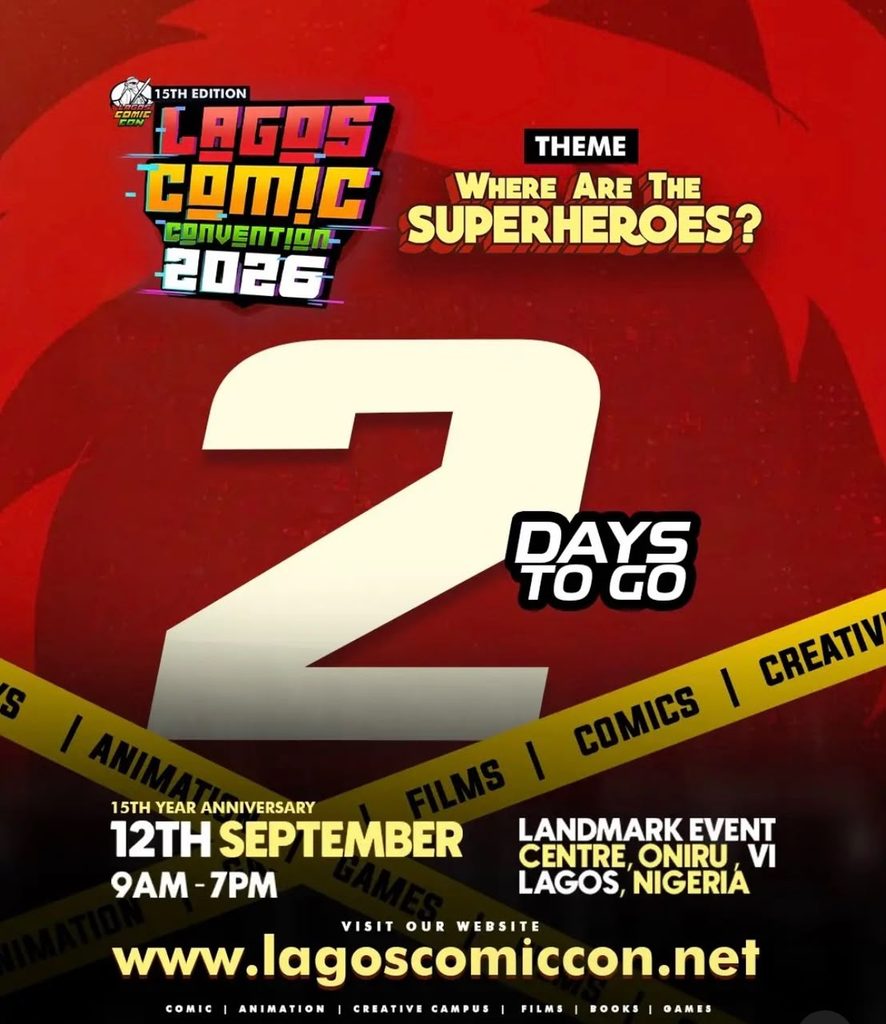
Lagos Comic Con 2026 is happening this Saturday, September 12, at Landmark Event Centre, and this is its 15th edition.
The organisers are actively positioning the edition around the question “Where Are The Superheroes?” and are promoting attendance, exhibitors, creators and industry participation.