For years, the conversation around African video games centered almost exclusively on casual mobile titles, quick arcade runners, match-three puzzles, and lightweight card games built around strict data and hardware limits. While mobile gaming remains the backbone of local player adoption, a quiet shift has been taking shape inside independent studios across the continent. Developers are increasingly aiming for the big screen, building ambitious 3D worlds designed to sit shoulder-to-shoulder with international console and PC releases.
Kenya-based studio Kunta Content has just delivered a major milestone in that direction. The Nairobi-headquartered developer officially opened its flagship 3D action-adventure game, HIRU: Mansa Assegai, for wishlisting on Steam. Following its spotlight appearance during the Origin Point Games showcase on November 12, having a live storefront page on the world’s largest PC gaming marketplace puts an authentic East African warrior epic directly in front of millions of global players.
The studio’s team shared their excitement over reaching this stage, noting that setting out to build a 3D action-adventure rooted in African history and mythology, and finally seeing its store page live alongside major global titles, is a moment they are still saying out loud just to believe.
A Young Maasai Prince on a Continental Quest for Justice
At the heart of HIRU: Mansa Assegai is a deeply personal, emotionally charged story anchored in real-world conservation themes. Players step into the sandals of Hiru, a young Maasai prince whose life is shattered when ruthless poachers retaliate against his efforts to protect local elephants. In a devastating attack, the syndicate destroys his village, murders his family, and kidnaps his sister.
Driven by grief, duty, and a fierce need for justice, Hiru sets out on an epic journey across the continent to track down the perpetrators and bring his sister home. Rather than confining the action to a single small map, Kunta Content has designed an expansive continental trek that carries players from the open golden savannas of the Maasai Mara through the dense, humid forests of the Congo and deep into the harsh Sahara desert landscapes of northern Nigeria.
Along the way, the narrative weaves wildlife protection directly into the gameplay loop. Encounters with endangered elephants and local communities highlight the real-world struggle against illegal poaching networks, grounding the high-stakes action in urgent ecological and cultural reality.
Traditional Warrior Craft, Realistic Combat, and Tracking Mechanics
What makes HIRU: Mansa Assegai stand out from generic open-world action titles is how deeply its mechanics draw from indigenous knowledge and physical combat traditions. Instead of relying on modern military firearms as the default solution to every conflict, the game emphasizes close-quarters hand-to-hand fighting, tactical stealth, and traditional Maasai warrior skills.
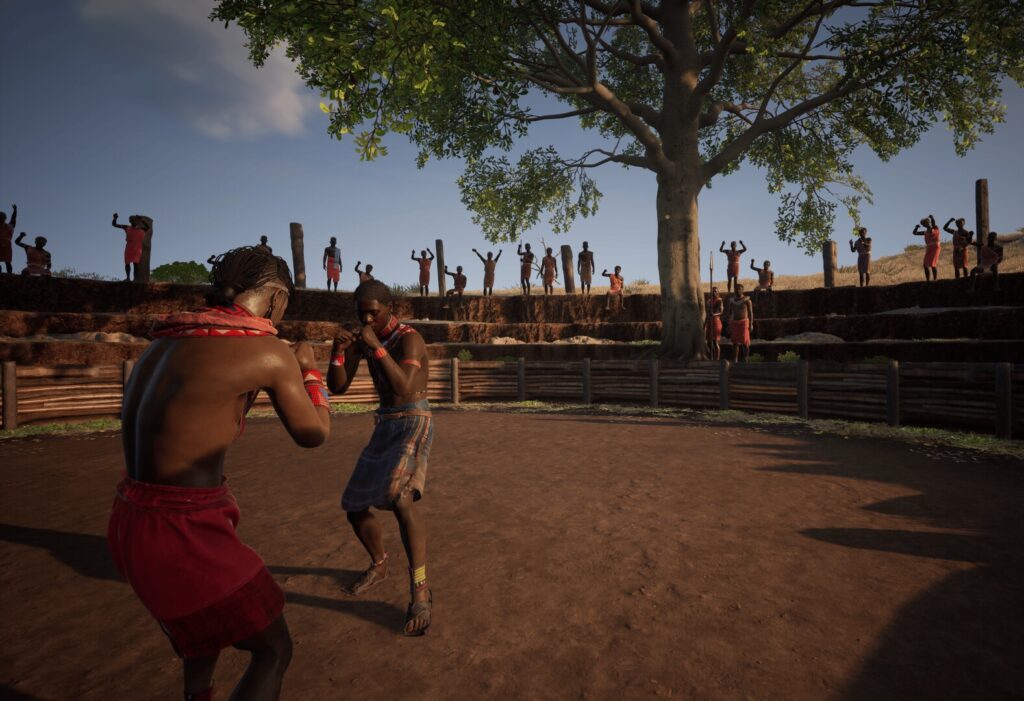
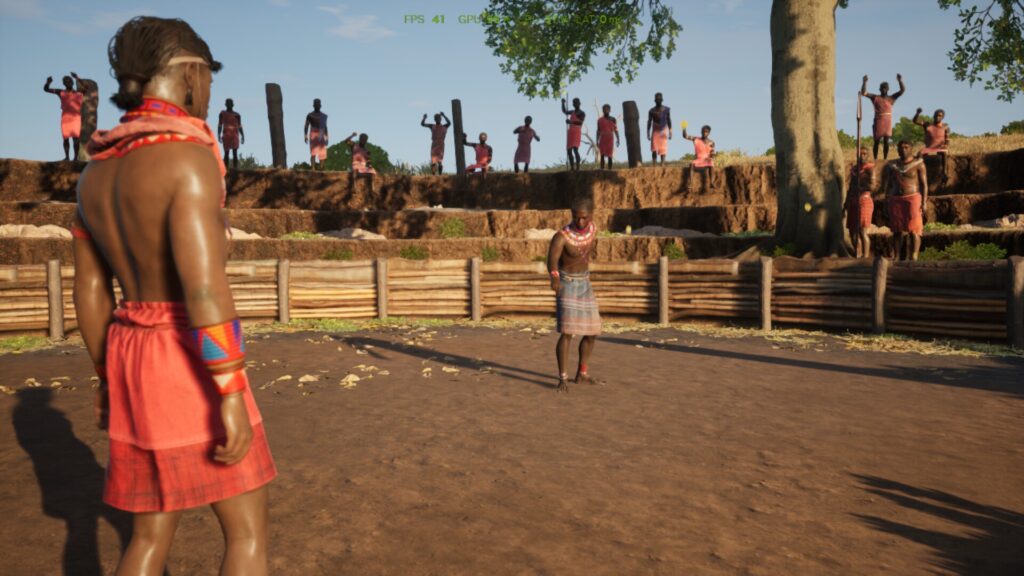
Combat encounters look raw and grounded. Players square off in dusty village arenas and open bushlands, trading heavy punches, reading opponent stances, and using traditional weaponry like the assegai spear alongside modern survival tools picked up along the trail. Watching crowd circles gather around earthen fighting pits while warriors test their strength captures a visceral, community-driven energy rarely seen in mainstream video games.
Beyond brawling, tracking plays a central role in how players navigate the wilderness. Using an environmental tracking system inspired by traditional hunting practices, players read footprints, broken foliage, and terrain clues to hunt down poacher camps across shifting weather conditions and full day-night cycles. Every biome demands a different tactical approach, forcing players to adapt their survival gear and stealth strategies as they move from grassland to rainforest to desert.
Inside Kunta Content’s Push for AA-Quality African Games
Founded in 2016 and led by CEO Dean Gichukie alongside CTO Telvin Njoroge, Art Director Kennedy Kyalo, and Senior Game Developer Ian Okinda, Nairobi-based Kunta Content has spent nearly a decade building original interactive stories rooted in African heritage. Having previously worked with global partners and released titles like Kushaba and Mazu, the studio has steadily scaled its technical ambition.
Building an AA-scale 3D action-adventure game in East Africa comes with steep technical and financial hurdles, from securing high-end rendering hardware to building custom character animations and expansive terrain shaders. Looking at the PC system requirements listed on Steam, which call for a 64-bit Windows setup, 16 GB of RAM, a dedicated graphics card like an Nvidia GTX 1070 or AMD RX 5700, and 70 GB of storage space, it is clear the team is not cutting corners on visual fidelity or world scale. Alongside the PC release, the studio is also preparing versions for console players, including optimization for Xbox Series X|S.
Why Steam Wishlists Matter for African Studios
Opening a Steam page months ahead of launch is one of the most critical steps any independent studio can take. On Steam, wishlists are far more than a vanity metric; they directly influence the platform’s recommendation algorithms, determine whether a game gets featured on the front page during launch week, and serve as hard proof of commercial demand when studios pitch to international publishers or investors.
For African developers breaking into the global PC market, every early wishlist sends a clear signal that players around the world are hungry for fresh settings, authentic cultural representation, and stories told from an African perspective. If you want to back homegrown 3D game development and stay notified the moment a release date drops, head over to the official store page and add HIRU: Mansa Assegai to your wishlist on Steam.