Here’s a question that splits gaming communities straight down the middle.
“Free Fire or Fortnite?”
One group laughs. The other group pulls out statistics.
Because here’s the truth Fortnite is arguably the most culturally influential battle royale ever made.
Travis Scott concerts inside a game. Collaborations with Marvel, Star Wars, and Nike.
Hundreds of millions of players globally. The game that turned “building” into a combat mechanic and changed how the world thinks about live service gaming.
And Free Fire? Free Fire has over 1.3 billion lifetime downloads, 110 million monthly active users, and in Nigeria it’s one of the most widely played mobile games in the country.
Two very different games. Two very different audiences. Let’s break it all down from the beginning.
The Origin of Fortnite: A Game That Almost Never Was
Epic Games announced Fortnite as early as 2011. But it wasn’t a battle royale.
It was Fortnite: Save the World a cooperative zombie survival game where players gathered resources, built structures, and defended against waves of enemies.
Part Minecraft. Part Left 4 Dead. It spent six years in development and launched in July 2017 to a mostly underwhelmed audience.
Then something interesting happened.
PUBG had just launched on Steam and was breaking records.
Epic watched the battle royale genre explode in real time and made a bold call build a Battle Royale mode in 60 days and drop it as a free add-on to the struggling Save the World.
On September 26, 2017, Fortnite Battle Royale went live. Within two weeks it had 10 million players.
Within months it was the most watched game on Twitch, pulling in celebrities, athletes, and cultural icons who had never touched a controller before.
By 2018, it was generating $5 billion in revenue in a single year one of the most profitable games in history.
Fortnite wasn’t supposed to be a battle royale. The fact that it became the battle royale almost by accident is one of the wildest stories in gaming history.
The Origin of Free Fire Built for the Phones People Actually Had
The same year Fortnite launched its Battle Royale mode, a small Vietnamese studio called 111 Dots Studio was building something with a completely different audience in mind.
Garena, a Singapore-based gaming company founded by Forrest Li in 2009 acquired the project, published it globally, and on December 8, 2017, Garena Free Fire launched on Android and iOS.
The design philosophy was simple and deliberate: make a battle royale that works on the phones people in Southeast Asia, Latin America, and Africa actually own.
Not flagship devices. Mid-range and low-end smartphones. The kind that cost ₦20,000 to ₦50,000.
The game ran on as little as 1GB of RAM. Matches were capped at 50 players and lasted around 10 minutes short enough to fit a break, a commute, or a few minutes between lectures.
By 2019, Free Fire was the most downloaded mobile game in the world.
By 2020, it had crossed 500 million downloads. Today it sits at over 1.3 billion downloads with 33 million daily active users.
Watch the Free Fire official trailer here
So What’s Actually Different?
Platform: This Is the Big One
This is where the comparison gets real.
Fortnite is primarily a console and PC game. Yes, it has a mobile version but after a years-long legal battle with Apple, Fortnite was removed from the App Store in 2020 and only returned to iOS in select regions in 2024.
Android support has also been inconsistent. For most African players, Fortnite on mobile has simply not been a stable, accessible option.
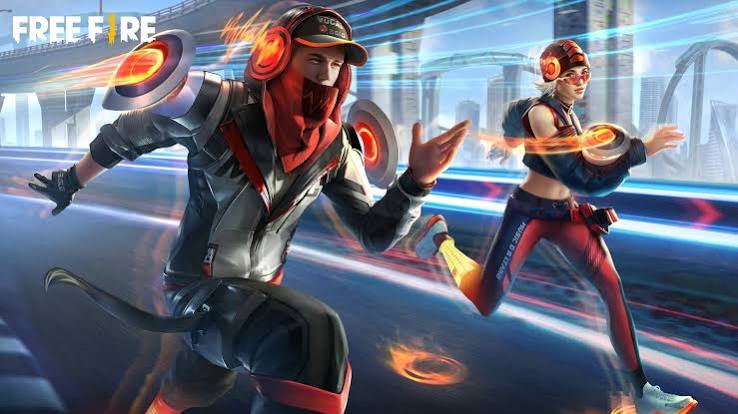
Free Fire was built for mobile from day one. No compromise. No “also available on phone.”
The phone is the platform. It was engineered to run smoothly on devices that would struggle with Fortnite and that single design decision is why Free Fire dominates in emerging markets where console setups are rare and mid-range Android phones are everywhere.
Gameplay Style
Fortnite’s defining mechanic is building.
You gather wood, brick, and metal during a match and construct walls, ramps, and towers to gain high ground and protect yourself.
At the highest levels, Fortnite matches look like watching two architects fight structures going up and coming down in seconds. It takes serious time to master and is completely unlike any other shooter.
Free Fire is a more straightforward battle royale land, loot, shoot, survive.
No building mechanic. The skill expression comes from movement, aim, and positioning. Matches are faster and more accessible.
You can drop into a game with minimal experience and still have fun.
That lower barrier to entry is a feature, not a weakness it’s why Free Fire found its audience so quickly in markets where gaming culture was still developing.
Player Count and Match Size
Fortnite drops 100 players onto a large map classic battle royale scale, with matches that can run 20–25 minutes at full length.
Free Fire runs 50 players on a smaller map with matches averaging around 10 minutes. Faster pace.
Quicker resolution. Designed for how people actually play games on their phones in short, intense bursts between real life.
The Africa Angle
Let’s be direct about this.
Fortnite is popular in Nigeria and across Africa but Free Fire is embedded in the culture here in a way Fortnite simply isn’t. Nigerian Free Fire content creators have millions of followers on TikTok creators like ITSJUSTDMS (2.2 million followers, 42 million likes) have built entire careers around the game.
The community is massive, active, and growing.
The reason is the same reason Free Fire dominates everywhere else in the developing world: it runs on the phones people already have, for free, with no barriers.
No high-end device required. No console needed. No App Store drama. Just download, open, play.
Price and Access
Both games are free to download. But here’s where it diverges.
Fortnite’s full experience including the best cosmetics, Battle Pass content, and competitive features, is designed around a premium console or PC setup.
Even on a mid-range phone, the experience is limited.
Free Fire on Android runs well on almost any device made in the last five years. Free to download.
Optional cosmetic purchases. The core competitive experience is fully accessible for zero naira on a phone you likely already own.
The Competitive Scene
Fortnite has the Fortnite Championship Series (FNCS) a global competitive structure with massive prize pools and professional players who earn through Epic’s official competition circuits.
Free Fire has the Free Fire World Series (FFWS) its own global competitive ecosystem with regional qualifiers across Africa, Latin America, Asia, and beyond.
In 2021, the Free Fire World Series peaked at 5.4 million concurrent viewers, a mobile esports record at the time.
African teams compete in the FFWS regional circuit, and the scene continues to grow as infrastructure improves across the continent.
If you have a high-end gaming setup PC, PS5, strong internet Fortnite offers one of the deepest, most creative, most visually spectacular battle royale experiences in gaming.
The building mechanic alone separates it from everything else in the genre. And as a cultural platform concerts, collabs, live events nothing comes close.
But if your device is a mid-range Android and your data situation requires some thought before queuing into a long match?
Free Fire was literally designed for you. Fast, accessible, competitive, and free with a community in Nigeria and across Africa that is genuinely thriving.
That’s not a consolation prize. That’s the whole point.
1.3 billion downloads didn’t happen by accident. Free Fire or Fortnite, which side are you on? And have you ever played both? Drop it in the comments.