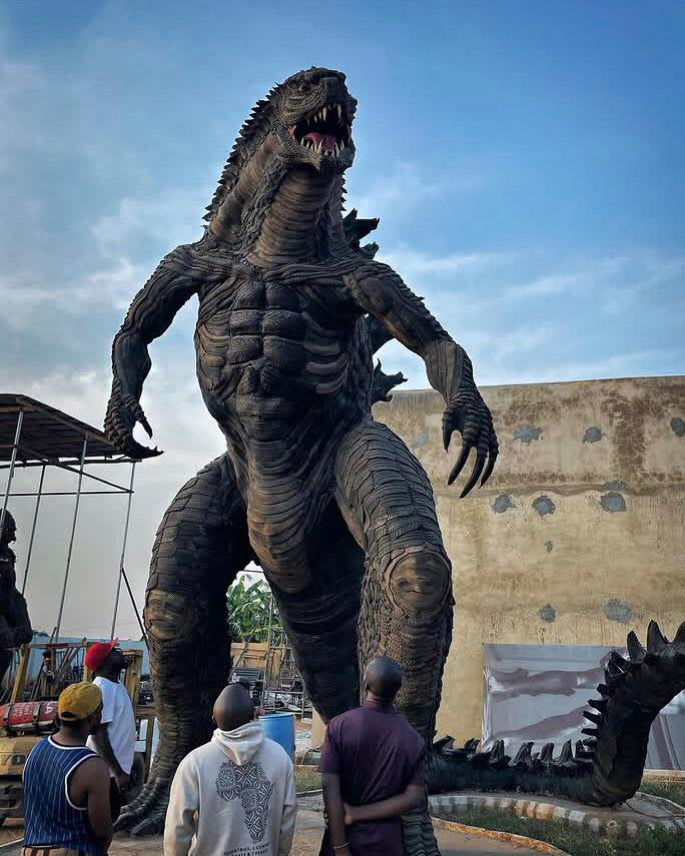
Pop culture fans and environmental advocates across Africa are celebrating a stunning artistic achievement. Nigerian eco-artist and sculptor Ajayi Toyeeb has captured international attention after building a massive 24-foot Godzilla sculpture crafted entirely out of discarded car and truck tires.
The jaw-dropping monument to cinema’s most famous Kaiju brings movie magic straight into the heart of West Africa. By blending pop culture fandom with environmental sustainability, Toyeeb’s giant creature showcases how creative passion can turn everyday urban waste into breathtaking public art.
Godzilla has been a dominant force in global cinema for over seven decades, captivating generations through classic monster movies, Japanese anime, and Hollywood’s blockbuster MonsterVerse franchise. However, seeing the legendary atomic titan brought to life at a towering scale of 24 feet using recycled rubber offers a fresh, locally inspired perspective on the iconic character.
Building a sculpture of this size required immense physical labor, precise technical skill, and deep dedication. Toyeeb carefully sourced hundreds of discarded rubber tires from local mechanics, roadsides, and dump sites. Rather than letting these materials pollute the environment or burn in toxic dump fires, he saw them as raw materials waiting to be transformed into creative masterpieces.
To construct the giant monster, Toyeeb designed a reinforced internal frame to support the massive weight of the structure. He then painstakingly hand-cut, layered, bolted, and shaped individual pieces of rubber tread to mimic Godzilla’s trademark rough skin, muscular posture, sharp claws, and famous jagged dorsal fins running down its spine.
The final result captures the dynamic energy, terrifying presence, and iconic silhouette of the King of the Monsters, instantly drawing awe from monster movie fans and art lovers alike.
Environmental Message Meets Pop Culture Passion
Beyond its impressive visual scale, Toyeeb’s Godzilla sculpture carries a powerful message about recycling, sustainability, and creative resourcefulness.
Improperly discarded tires pose a serious environmental and public health hazard across many cities worldwide, as stagnant water inside dumped tires creates breeding grounds for mosquitoes, while burning rubber releases dangerous toxins into the atmosphere. By collecting waste tires and giving them new purpose, Toyeeb demonstrates how art can play an active role in cleaning up local communities and promoting green initiatives.
Furthermore, the choice of Godzilla is uniquely symbolic. In cinematic history, Godzilla was originally created as a metaphor for nuclear radiation and environmental destruction. By building a giant monster out of actual industrial environmental waste, Toyeeb connects the classic cinema narrative directly to modern ecological challenges, proving that creative art can spark vital conversations about protecting our planet.
Photos and video clips showing the creation process and final reveal of the 24-foot Godzilla sculpture quickly spread across major social media channels. Popular cultural hubs, art communities, and movie forums across platforms like Instagram, X (formerly Twitter), Facebook, and Reddit saw tens of thousands of likes, shares, and enthusiastic comments praising the sculptor’s craftsmanship.
Pop culture enthusiasts worldwide highlighted the detailed texturing of the rubber skin, praising how the natural grooves and treads of the tires perfectly match Godzilla’s rough, reptilian hide. Many film fans noted that the sculpture rivals official movie props seen at major international film studios, celebrating Toyeeb as one of the most talented eco-sculptors working on the African continent today.
The overwhelming global response to the giant Godzilla build has fueled even greater creative ambitions for Toyeeb. Building on this success, the artist continues to experiment with large-scale recycled tire art, crafting matching pop culture monuments, including a massive King Kong sculpture, to expand his growing lineup of eco-friendly cinema titans.
As local art galleries, cultural organizations, and international media outlets highlight Toyeeb’s work, his giant recycled sculptures serve as an inspiring testament to human ingenuity, showing that with passion, vision, and creativity, even discarded waste can be transformed into unforgettable cinematic legend.