Africa has no shortage of talent, ideas or ambitious animated projects. So why has the continent struggled to turn the excitement around Iwájú and Kizazi Moto into a sustained wave of global franchises?
There was a time, not too long ago, when it felt as if African animation had finally reached a turning point. The moment was impossible to miss.
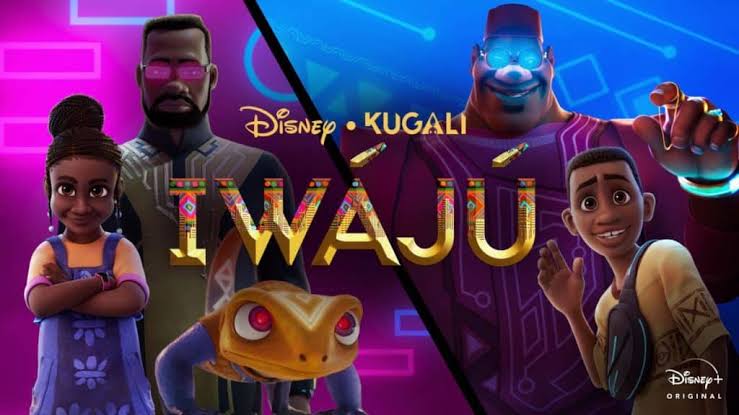
In February 2024, Disney and Pan-African entertainment company Kugali released Iwájú, a six-part animated series set in a futuristic Lagos. It was more than another animated show. For African creators, it felt like a door had suddenly opened.
Here was a Nigerian story, set in a futuristic Nigerian city, reaching an international audience through one of the most recognisable entertainment companies in the world.
Disney itself described the project as a first-of-its-kind collaboration between Walt Disney Animation Studios and Kugali. The series premiered in Lagos before its Disney+ release and later aired across Africa on Disney Channel.
The excitement was understandable. For years, African animators had been producing commercials, children’s shows, independent films and short-form content, often with little international recognition.
Then Iwájú arrived and suddenly the rest of the world was looking at Lagos through an African creative lens.
It was a moment. But now, more than two years later, an uncomfortable question needs to be asked.
Where is the next one?
Not the next good African animation. There are plenty of those.
Where is the next African animated property that captures the world’s attention, becomes a genuine international conversation and turns into a sustainable franchise?
That question is not an attack on Iwájú. In fact, it is a tribute to what the series represented. Because Iwájú raised expectations.
It made Africa believe that the world was ready for its animated stories. The problem is that the thunder has not struck again with quite the same force.
Africa Did Not Stop Creating
The first thing to make clear is that African animation has not gone anywhere. If anything, there has been an explosion of ideas.
Across Nigeria and the wider continent, studios and independent creators are producing ambitious trailers, pilots, short films, concept reels and projects in development.
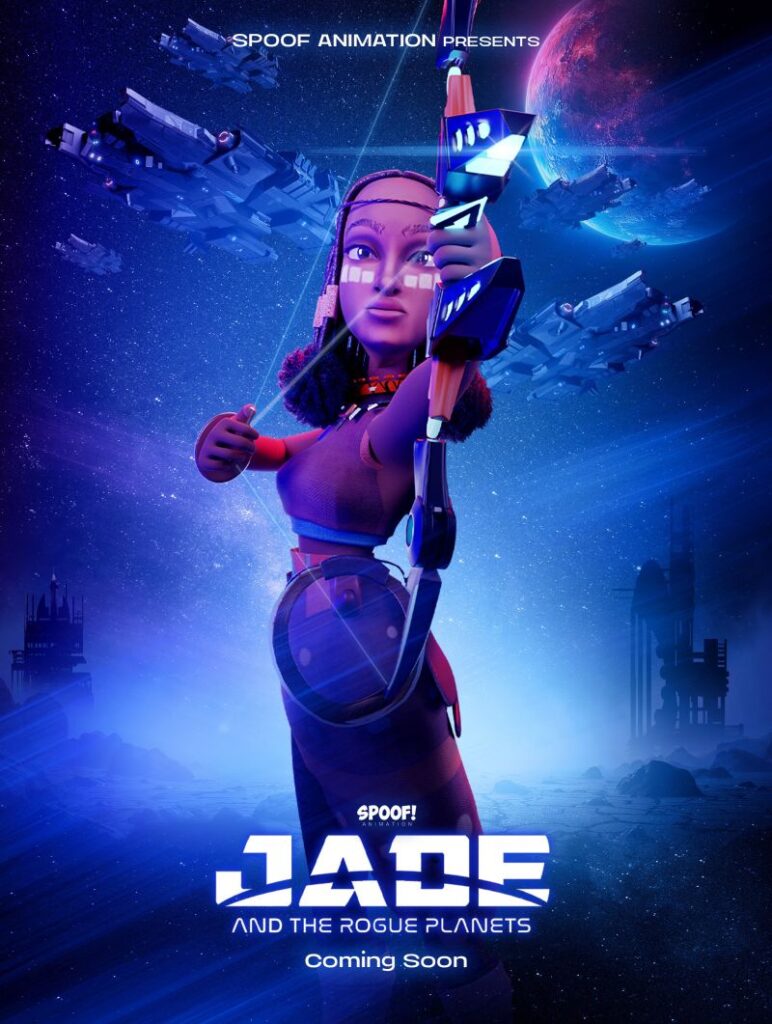
In Nigeria, SPOOF Animation has been developing Jade and the Rebel Planets, while continuing to build its production business around both original and international animation work.
NCLAVE Studios has been developing Yekini, another Nigerian property attempting to push an original African character into the animated space.
Magic Carpet Studios has been developing Legends of Bulan, an ambitious fantasy world inspired by African mythology, heroes and battles. The project has already been showcased internationally as a work in development, and its creators are openly seeking writers, animators and investors to help bring the world to life.
And Nigeria is not alone. Across Uganda, Kenya, Cameroon, South Africa, Ghana and other parts of the continent, studios are developing animation that is increasingly confident in its African identity.
There is talent. There are ideas. There are audiences. There is even international interest.
So what exactly is missing?
The uncomfortable answer may be continuity.
Africa Has Become Very Good at Making Trailers
One of the strange characteristics of the African animation industry is how often a spectacular teaser creates excitement about a project that may still be years away from becoming a finished production.
The teaser arrives. The characters look incredible. The world-building is impressive. Social media explodes. People begin asking when the series is coming.
Then silence.
Six months pass.
A year passes.
Sometimes the project returns.
Sometimes it does not.
This is not necessarily because the creators lack commitment. Animation is one of the most expensive and labour-intensive forms of storytelling in the world. A studio can spend months producing a few minutes of polished animation, only to discover that financing the next twenty minutes is an entirely different challenge.
A two-minute teaser can sell a dream. A 26-episode series requires an industry.
And that distinction may be the biggest lesson Africa needs to learn. We have become increasingly good at proving that we can make world-class animation.
We have not yet become equally good at building the businesses required to sustain it.
Kizazi Moto Was Another Opportunity
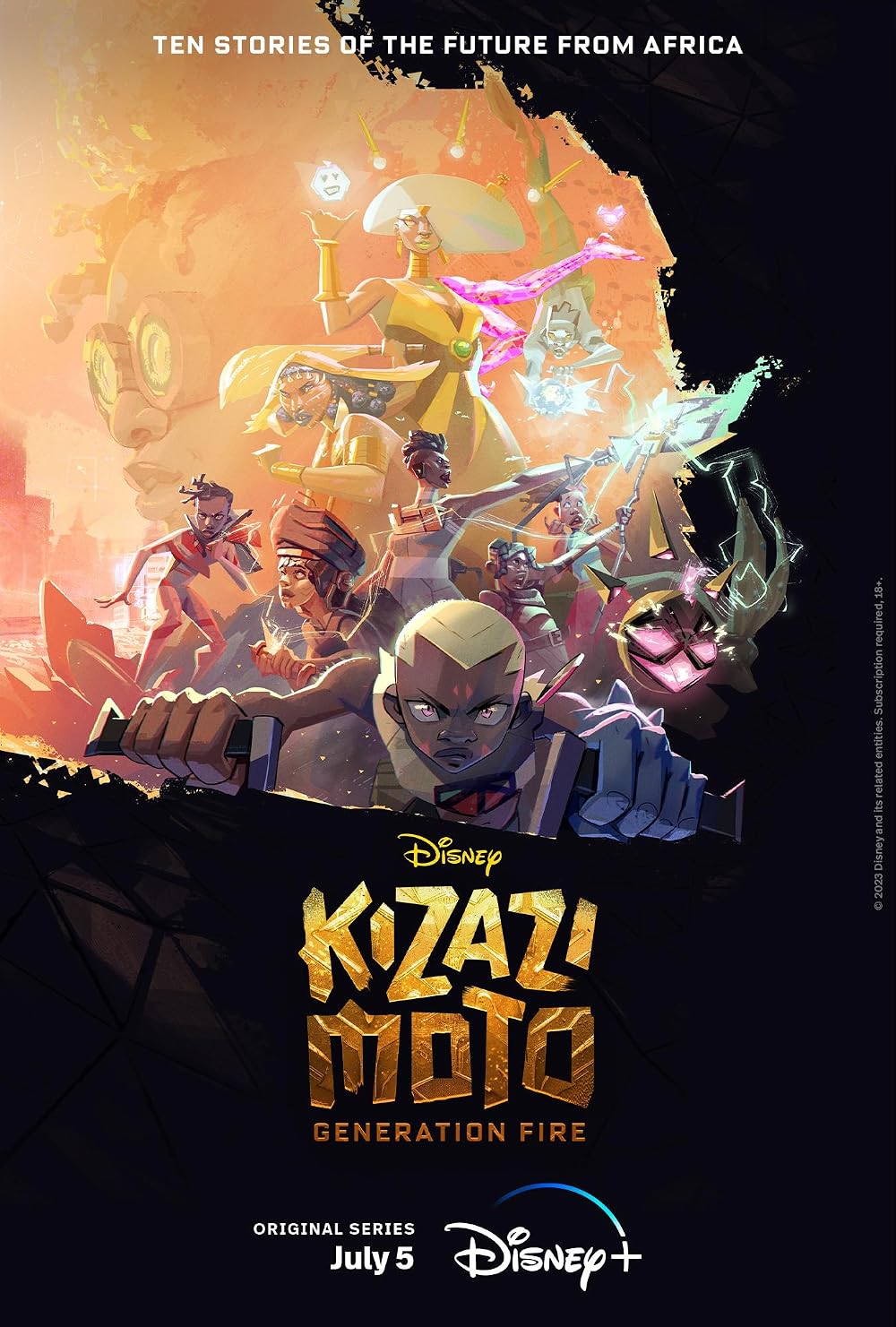
Before Iwájú, there was another important moment. Kizazi Moto: Generation Fire arrived on Disney+ in 2023 as an anthology of ten original animated shorts from creators across Africa, including South Africa, Egypt, Kenya, Nigeria, Uganda and Zimbabwe.
It was an extraordinary experiment because it did something African animation desperately needed. It gave multiple creators the opportunity to show the world what African stories could look like when creators were given room to imagine freely.
The shorts were different in style, tone and subject matter. They were bold.
They were strange.
They were imaginative.
And they proved that there was no single definition of African animation. But there was also a limitation.
An anthology of shorts can introduce worlds and characters, but it does not automatically create franchises.
The real test comes afterward. What happens to the character once the short ends?
Does someone finance a series?
Does a publisher produce a comic?
Does a game studio develop a game?
Does a toy company become interested?
Does a streaming platform commission more episodes?
Does the creator still own the intellectual property?
That is where the African industry continues to struggle.
Did Disney Help Africa or Use Africa?
This is probably where the conversation becomes uncomfortable. Did Disney help African animation?
Absolutely. The company brought enormous international visibility to Iwájú. It provided access to production knowledge, global distribution and a level of exposure that most African studios could not have generated alone.
The project also demonstrated that an African story could sit comfortably within the portfolio of one of the world’s most powerful entertainment companies.
That matters. But Disney is also a business. It did not enter the African animation space because it suddenly became a development agency for African creatives. It saw creative opportunity, commercial potential and a compelling partnership with Kugali.
There is nothing sinister about that. In fact, Africa should be doing exactly the same thing. The danger is not that Disney benefited from Africa.
The danger is if Africa benefited from Disney’s attention without building enough infrastructure to benefit after the attention moved elsewhere.
That is the real question.
Did Iwájú become the beginning of an African animation industry, or did it become a remarkable African success story that the industry celebrated without fully exploiting the opportunity around it?
We Celebrated the Moment. Did We Build on It?
Imagine if Nigeria had treated Iwájú as more than a television series.
Imagine a coordinated industry effort immediately afterward to identify 20 African animated properties with franchise potential.
Imagine government-backed financing for development.
Imagine banks understanding animation as intellectual property rather than simply a production expense.
Imagine telecommunications companies funding African animation because they need local content for their platforms.
Imagine broadcasters committing to buying African animated series.
Imagine investors understanding that animation may take years to mature but can generate revenue through television, streaming, publishing, gaming, merchandising and licensing.
Imagine African studios forming partnerships instead of each trying to solve the same problem alone. That could have changed the conversation.
Instead, individual studios largely went back to the grind.
And the projects kept coming.
Jade and the Rebel Planets.
Yekini.
Legends of Bulan.
And dozens of other projects across the continent.
The creativity never stopped.
The money did.
The Problem Is Bigger Than Funding
It is tempting to blame everything on investors.
But the industry also needs to examine itself.
Having a fantastic character does not automatically make a successful franchise.
Creators need to understand audience development, licensing, distribution, marketing and intellectual property management.
An animated property should not end when the episode ends.
The comic should be waiting.
The game should be possible.
The merchandise should make sense.
The soundtrack should have value.
The characters should be recognisable.
The world should be expandable.
This is the lesson Hollywood learned a long time ago.
Superman is not just a movie.
Spider-Man is not just a comic.
Pokémon is not just an animated television series.
These are ecosystems.
Africa has characters.
Africa has mythology.
Africa has extraordinary visual culture.
Africa has stories that could travel.
What Africa has not yet consistently demonstrated is the ability to turn those ingredients into long-lasting commercial ecosystems.
Perhaps the Audience Has a Role Too
There is another uncomfortable part of the conversation.
African audiences often say they want African animation.
But wanting something and supporting it are not necessarily the same thing.
A teenager may spend hours watching Japanese anime and American animation while ignoring an African studio’s latest project because the production does not have the same marketing budget.
People complain that African creators need to produce more. But production costs money.
People demand better animation.
But better animation costs money.
People want longer episodes.
But longer episodes require larger teams.
People want African franchises.
But franchises require audiences willing to become consumers, not simply viewers.
If Africa wants its own global animation giants, then the audience must eventually participate economically.
Watch. Subscribe. Buy. Share. Attend.
Purchase merchandise. Support crowdfunding.
Talk about the shows. Create fan communities. The industry cannot be built entirely on free YouTube views.
The Next Iwájú May Already Be Sitting in a Hard Drive
This is why projects such as Jade and the Rebel Planets, Yekini and Legends of Bulan deserve attention.
Not because they are guaranteed to become the next Iwájú.
They are not.
No creator can guarantee that.
They deserve attention because they represent something Africa desperately needs: a pipeline of original intellectual property.
Some projects will fail. Some will be abandoned.
Some will be transformed into something completely different.
And perhaps one of them will eventually find the combination that Iwájú found: a compelling story, memorable characters, excellent production, serious financing and international distribution.
When those elements come together, the thunder will strike again.
But this time, Africa needs to be ready.
The biggest mistake would be to conclude that the African animation opportunity has passed.
It has not.
If anything, the global entertainment industry is more interested than ever in new stories and new audiences.
The question is whether African creators can move from constantly proving that they have talent to building companies that can sustain that talent.
That means governments need to treat animation as an export industry and an intellectual property business, not simply children’s entertainment.
It means investors need to become more patient. It means creators need to think beyond the pilot.
It means studios need to collaborate. It means broadcasters and streaming platforms need to take more risks on African original animation.
And it means audiences need to support the content they claim they want.
Disney did something important with Iwájú.
It showed the world what was possible when African creativity met global resources.
But perhaps the greatest lesson is this:
Disney cannot be responsible for building Africa’s animation industry.
Neither can Netflix. Neither can Amazon.
Neither can any foreign company.
They can provide partnerships, money, distribution, expertise and global visibility.
But the responsibility for turning those moments into an industry ultimately belongs to Africa.
Two years after Iwájú, the question is therefore not whether Africa has another great animated story.
It clearly does.
The question is whether we are willing to give that story enough time, money, infrastructure and audience support to become something bigger.
Because the next Iwájú may already exist.
It may be sitting on a studio computer in Lagos.
In Nairobi.
In Kampala.
In Yaoundé.
In Accra.
Or somewhere else on the continent.
The world may simply not have seen it yet.
And if Africa does not act quickly, another generation of extraordinary ideas may remain trapped in the same place where too many African animated dreams have ended before them, the teaser.