At Lagos Comic Con 2026, creators and industry leaders debated what it will take for Nigeria’s superhero comics to become sustainable businesses, with funding, international markets, business development and artificial intelligence emerging as major parts of the conversation.
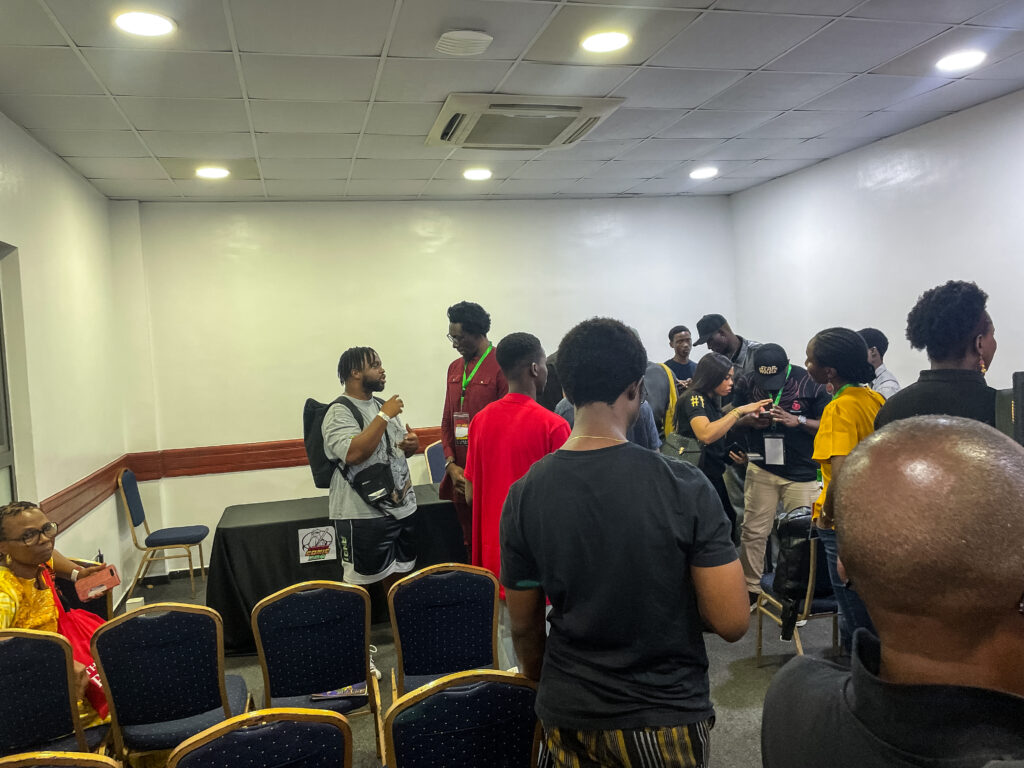
The discussion took place during a Comic Zone panel titled “Can Superhero Comics Survive in Nigeria?”, featuring Toluwalakin Olowofoyeku, co-founder of Kugali Media; Uzo Chiemelu of Symphonii Studios; Jide Martin, founder and Group CEO of Comic Republic and CR Motion Plus; and moderator Ayodele Elegba.
Rather than focusing only on the creative side of comics, the panel examined the business challenges behind building and sustaining Nigerian comic properties. Martins pushed creators to approach financial institutions and international partners more aggressively, while Chiemelu highlighted the realities of getting creative projects financed.
Olowofoyeku, meanwhile, shared Kugali’s experience of pitching its projects dozens of times before securing major opportunities, and the panel also turned to AI, specialization and the need for creators to understand what they are actually trying to build.
The conversation ultimately moved beyond whether Nigerian creators can produce good superhero stories. It examined whether they can build the businesses, partnerships and systems needed to take those stories further.
The business cannot stop at Nigeria
One of the strongest points from Jide Martins was that Nigerian creators need to think beyond the local market when building creative businesses.
Martin argued that major entertainment companies around the world do not rely on just one market to make their businesses work.
He pointed to the way major film businesses look beyond the United States and consider markets such as Europe and China when releasing their productions.
For Martin, the same thinking should apply to Nigerian creative businesses.
If companies are actively looking for markets and business partners around the world, he questioned why Nigerian creators should approach their own businesses differently.
“It’s not about who you are doing business with, it’s where you can find the business,” Martin said.
His argument was that creators can spend a lot of time complaining about the difficulty of building creative businesses in Nigeria, but that difficulty does not remove the need to develop a strategy for finding opportunities.
According to him, part of the problem is that creators may not always be putting in the right strategy and effort to approach the business side of their work.
The point goes beyond comics.
A comic book may begin with a Nigerian story, character or superhero, but the business around that property does not necessarily have to remain within Nigeria.
International publishers, distributors, investors, animation companies and other partners can potentially become part of the journey if creators are prepared to look for those opportunities.
For Martin, the question is therefore not simply whether the Nigerian market is difficult.
It is how creators can build businesses that are able to operate in a much larger market.
“Let them say no first”
The discussion became more direct when the issue of funding came up.
Martin argued that no matter how good a creative idea is, it still needs the right financing if it is going to become a serious business.
He then asked the audience a simple question: how many people had sent proposals or emails to almost every financial institution in Nigeria?
Only a few hands went up.
For Martin, that response showed a problem.
He questioned whether creators were doing enough to present their projects as businesses rather than simply as creative ideas.
A creator may have a comic, animation or other piece of content, but Martin argued that there needs to be a business plan behind it.
How will the project make money?
How will the investor get a return?
What is the monetization strategy?
And who in the business is responsible for developing those opportunities?
Those are questions creators need to be prepared to answer.
Martins suggested that business development should be part of the process, rather than something creators think about only after the creative work has been completed.
But Ayodele Elegba pushed back on the point.
As moderator, Elegba raised a practical concern: Nigeria is difficult for businesses, and not every bank or financial institution will necessarily be willing to look at a creative proposal.
Martins’ response was simple.
“Let them say no first.”
His argument was that a rejection should not automatically end the process.
Instead, creators should try to understand why the proposal was rejected.
If a financial institution says no, Martins suggested going back and asking what did not work. Creators can then seek advice from people who have successfully raised funding or built similar businesses and use that information to improve their next proposal.
For him, the process may involve a first rejection, a second rejection and even a third.
But the goal is to learn from each one and improve the next proposal.
That persistence, Martin argued, can eventually lead to a proposal that works.
From Comic Republic to international opportunities
Martin also used Comic Republic’s experience to explain why business development matters.
He mentioned a deal involving Toei, explaining that the process started through Comic Republic’s business development efforts and its approach to the Japanese community.
The example was part of his wider argument that international partnerships do not simply appear.
Someone has to look for them.
Someone has to make the introduction.
Someone has to send the proposal.
And someone has to continue the conversation after the first response.
That process can be uncomfortable for creators who are more familiar with developing stories and characters than making business pitches.
But the panel suggested that the ability to do both, or to work with people who can handle the business side, is becoming increasingly important.
But is pitching really that simple?
Uzo Chiemelu offered a different perspective during the discussion.
After Elegba suggested that some of Martins’ advice could be difficult to relate to, Chiemelu said he would not necessarily say he disagreed with Martins.
Instead, he pointed to realities he had encountered that sometimes go against the idea that simply approaching financial institutions will lead to opportunities.
According to Chiemelu, financial institutions have particular things they are willing to finance and other areas they may not be interested in.
That means a creative business can have a strong idea and still struggle to find an institution willing to fund it.
The disagreement, therefore, was less about whether creators should pursue funding and more about how realistic different funding routes are.
It also highlighted a larger issue facing creative businesses in Nigeria: understanding what different funders are actually looking for.
Kugali’s experience: Keep pitching
Toluwalakin Olowofoyeku brought another experience to the discussion.
He explained that Kugali Media had been through an extensive pitching process before receiving major funding support.
Olowofoyeku revealed that Kugali was one of the nine recipients of the Next Narrative Africa grants, which provide funding for film projects in Africa.
But getting there, he explained, involved years of pitching.
Before receiving that grant, Kugali had pitched its projects to numerous people.
Olowofoyeku said he had physically visited around a dozen animation studio offices in Los Angeles to pitch.
That was in addition to virtual meetings, pitch decks and other conversations.
The process was not simply about sending the same presentation to everyone.
He explained that when the company pitched to different people, it would customize the pitch based on what it believed that particular person or organization was looking for.
The same story could therefore be presented differently depending on the potential partner.
And the process did not stop after one meeting.
Olowofoyeku’s message was straightforward: keep looking.
For creators trying to turn an idea into a business, the pitch is not a one-time event.
It can involve dozens of meetings, countless emails, rejected proposals and repeated changes to the presentation.
The important part is continuing to search for the right opportunity.
AI is a tool, not the product
The conversation later moved from financing to another major issue in the creative industry: artificial intelligence.
Martins argued that AI has the potential to make creative businesses more efficient, but he also stressed the need for ethical boundaries and guidelines around its use.
He compared AI with other tools.
The goal, in his view, should not be to use AI simply because it exists.
Instead, creators should consider where it can save time and improve their workflow.
For example, he questioned whether creators should spend unnecessary amounts of time on repetitive tasks when an AI tool could assist with them.
His broader point was that creators should learn how to use technology to make their work more efficient while still maintaining control over the creative process.
Martins suggested that the industry needs to embrace AI while also establishing clear boundaries around how it is used.
The technology itself is not necessarily the problem.
The bigger question is how creators use it.
“What exactly are you making?”
Olowofoyeku expanded on the AI conversation by connecting it to something he sees as a broader problem among people entering creative and technology fields: sometimes people want to learn a tool before they know what they want to create.
He gave an example from his own experience.
People have approached him asking him to teach them technology because they see him as a technology or IT person.
But his response is usually to ask: What do you actually want to make?
He compared it to someone walking up to a carpenter and asking to be taught how to use a hammer or screwdriver without explaining what they want to build.
The carpenter would first want to know whether the person was making a table, chair or cupboard.
The tool comes after the objective.
Olowofoyeku argued that the same principle applies to AI.
Instead of asking how much AI should be included in a creative process, creators should first ask what they are trying to make.
Once the goal is clear, they can determine which tools are actually useful.
That approach also avoids turning AI into the centre of the creative process.
The technology becomes a means of achieving something rather than the thing being created.
Everyone starts somewhere
One of the more personal moments of the panel came when Olowofoyeku reflected on how many comic creators begin.
He looked around the room and asked how many people had drawn comics as children.
Almost everyone raised a hand.
For him, that is where many creators begin.
They draw pictures, create characters and try to tell stories.
But those early stories are not always great.
Olowofoyeku joked that if many creators went back and looked at the stories they wrote between the ages of 10 and 20, they might be embarrassed by the writing, even if the artwork was not necessarily bad.
But that is part of the process.
People start somewhere.
He said he had met more than 30 teenagers in the previous two months who were already drawing comics and trying to tell their own stories.
The important thing, he suggested, is what happens as those young creators mature.
Not everyone who starts by drawing comics will remain a comic artist.
People begin to specialize.
Some may become writers. Others may become artists, animators, directors, producers, business developers or work in other areas of the creative industry.
Olowofoyeku himself offered an example.
Although he is involved in making comics through Kugali, he said he has not personally drawn any of the company’s comics.
He can draw, but his role has developed in another direction.
That is part of what specialization looks like.
Find the problem you want to solve
The discussion returned to the question of AI and specialization through another simple analogy.
Olowofoyeku said that instead of asking someone to teach you how to use a screwdriver, you should first identify what you want to build.
The same applies to creative careers.
A person should not simply say, “I want to become a comic artist,” “I want to learn AI,” or “I want to learn technology” without thinking about the problem they want to solve.
What are you trying to create?
Who is it for?
What does it need to achieve?
What skills are required?
And which tools can help you get there?
Those questions can determine whether AI becomes useful or simply becomes another trend that a creator feels pressured to follow.
For the panelists, the future of creative work will involve people becoming more specific about their roles and learning how to use the right tools for those roles.
So, can superhero comics survive in Nigeria?
The panel did not provide a simple yes-or-no answer.
Instead, the discussion suggested that the survival and growth of superhero comics in Nigeria will depend on more than the quality of the characters and stories.
Creators need to understand the business side of what they are building.
They need to develop monetization strategies.
They need to approach potential investors and partners.
They need to be willing to hear “no” and learn from it.
They need to look beyond Nigeria when there are opportunities to build international partnerships.
And they need to understand how new technology, including AI, can fit into their creative process.
At the same time, the panel acknowledged that the Nigerian creative environment has its own difficulties.
Funding is not guaranteed. Financial institutions may have their own priorities. International opportunities can take years of pitching and relationship-building.
But the experiences shared by the panelists also showed that these obstacles do not necessarily mean creators should stop trying.
Kugali’s experience of repeatedly pitching before securing major funding illustrated the scale of persistence that can sometimes be required.
Comic Republic’s approach to business development highlighted the importance of actively looking for partners rather than waiting for them to appear.
And the discussion around AI showed that creators will increasingly need to understand not just traditional creative skills, but also the tools that can make their work more efficient.
Perhaps the bigger question is not simply whether superhero comics can survive in Nigeria.
It is whether Nigerian creators can build the professional systems around their stories that allow those stories to survive, grow and reach audiences beyond the people who created them.
The characters may start in a sketchbook.
The story may begin with a teenager drawing at home.
But turning that idea into a lasting IP requires much more.
It requires an audience, a business model, financing, partnerships, specialization and people willing to keep knocking on doors after the first few doors have been closed.
As the panel at Lagos Comic Con 2026 made clear, the creative idea may be where the journey begins.
It is everything that comes after that which determines how far it can go.