When Ayodele Elegba walked into a room with 300 people in 2012, he wasn’t just hosting an event. He was making a bet on Nigerian creativity, on African pop culture, and on an audience that the industry hadn’t bothered to look for yet.
Most people would have called it a risk. Looking at it now, fifteen years later, it looks more like vision. Today, Lagos Comic Con is the largest indigenous pop culture festival on the African continent.
It has grown from a modest gathering of comic enthusiasts into a full-scale celebration of everything that lives at the intersection of art, imagination, animation, cosplay, gaming, comics, and the communities that have grown around all of it.
Creators who once sat in the audience now run studios. Characters that were sketched in notebooks are now animated series.
An industry that barely existed when the first Lagos Comic Con held is now producing work that travels internationally. And at the centre of it all is a quietly, consistent man.
Ayodele Elegba. Founder of Lagos Comic Con. CEO of Spoof Animation. President of the Association of Comic Book Makers of Nigeria. The man the industry calls the Dreammaker not as a title, but as a description of exactly what he does.
He didn’t come from money. He didn’t come from a creative dynasty. He came from a hospital, a syringe scare, and a decision that most people would have talked themselves out of.
He chose creativity when it wasn’t a viable career in Nigeria. He chose community when nobody was investing in one. He chose to build the table when there wasn’t one to sit at. Fifteen years later, that table seats thousands.
As Lagos Comic Con marks this milestone, Fifteen years of Lagos Comic Con is a story of vision, resilience, creativity and community.
We sat down with Ayodele Elegba, Founder and Convener of Lagos Comic Con, to take us back to where it all began and hear the untold stories behind the journey from a small gathering to one of Africa’s biggest pop culture conventions.
Interviewed by Comicpanel World
Q. When you started Lagos Comic Con, the comic and pop-culture community in Nigeria wasn’t as big as it is today. Did you feel like you were simply creating an event, or were you actually building the community and audience for it from scratch?
A: That’s a good question. A lot of people don’t know this but the event sarted by a nudging. A nudging that later became a clear instruction from God to do a Comic Con even when I had never been to one in my life at that time. It was Crazy because I heard it clearly “do it Big”. I remember 15 years ago just newly married and a child on the way I went to Ikeja looking for the biggest Event Centre I could get.
Everytime I found one that fit my budget and my pocket, God will tell me “No, its not big enough”. SO I kept on searching until I found the Water Parks Place which could sit a about 3000 or so and had break out meeting rooms for the panel sessions. I couldn’t afford the space but that first edition happened and it was the beginning of it all.
Q: Take us to the lowest point, not the early struggles everyone already knows about, but the specific moment during these 15 years, where you genuinely weren’t sure Lagos Comic Con would make it to the next edition. What happened, and what made you decide to keep going?
A: There have been many difficult moments over the 15 years. There was a time a marketer I had paid N350,000 to help us secure sponsors simply disappeared with the money. There were also several years when we had no sponsors and I had to clear my personal bank account just to keep my promise to the fans that Lagos Comic Con would happen. But the one I can never forget was 2023. I had already cleared my bank account and I was still short of what we owed the venue for the hall.
The venue owners were threatening to shut us down if I didn’t balance the payment before the event. And the scary part was that people had already bought tickets. They were trusting me to deliver an event that they had been looking forward to. I remember being genuinely scared. I had no money left. I called people looking for somewhere to borrow the money, but nobody could come through. At some point, I honestly didn’t know what I was going to do.
Then something happened that I still find difficult to explain. A pastor who had heard about my situation through a distant friend reached out and offered to loan me the money I needed. I couldn’t believe it. Someone who wasn’t even close to me heard what was happening and decided to help. I took the money, paid the venue, and Lagos Comic Con went ahead. And that edition turned out to be a huge success.
That experience reminded me why I keep doing this. I have always felt that Lagos Comic Con belongs to the fans as much as it belongs to me. Once people buy a ticket and make plans around the event, I feel a responsibility to them. So even when things have looked impossible, I’ve always had one decision in my head: I will not be the person who breaks the promise that Lagos Comic Con will happen.
Q: The first Lagos Comic Con had 300 people. Today it’s the biggest pop culture festival in Africa. But numbers don’t tell the full story what’s the moment from these 15 years that meant the most to you personally, that no attendance figure could ever capture?
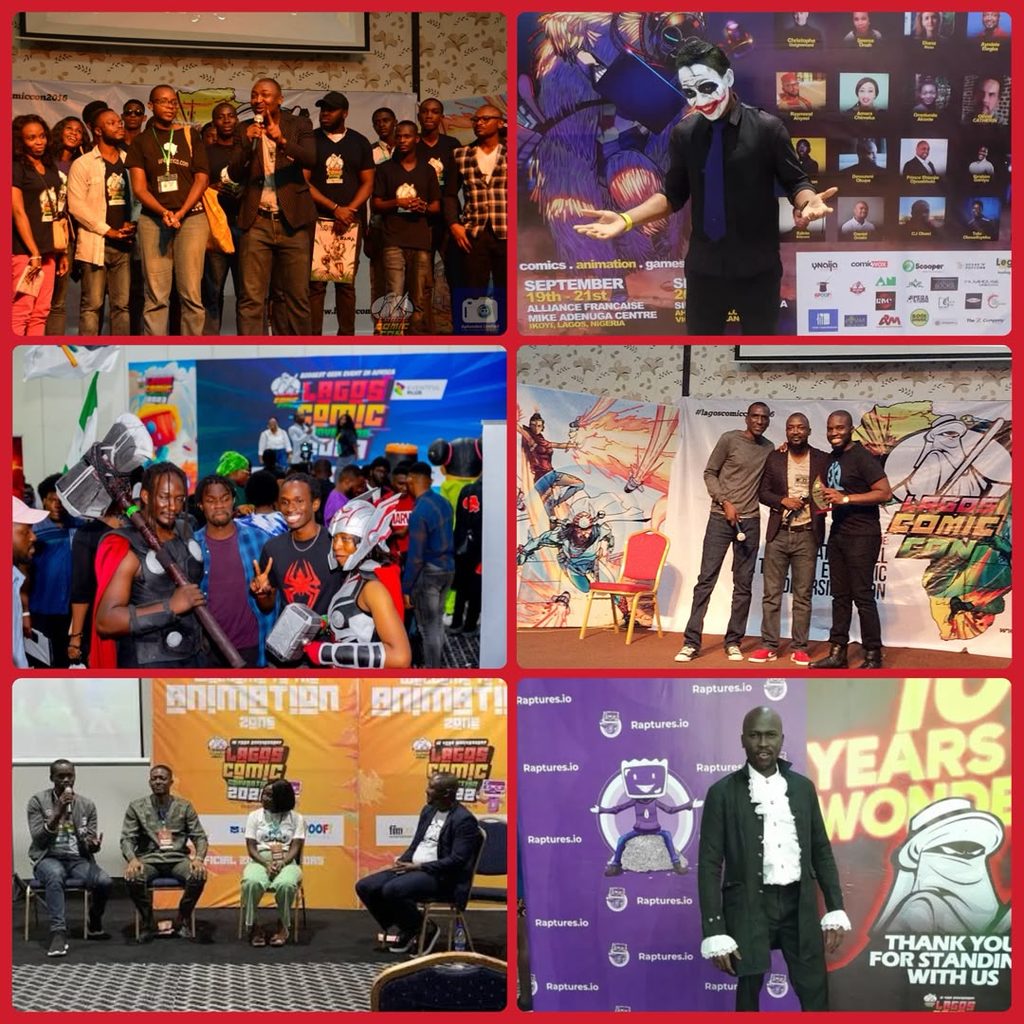
A: There have been many moments over the last 15 years that I am proud of, but the one that means the most to me has very little to do with numbers. It was in the early years, I think the year we had the event at the Mike Adenuga Centre courtesy of the French Embassy. I was standing somewhere at the back, watching people move around the venue. I saw young people dressed as characters they loved, artists selling comics they had created, gamers playing together, filmmakers meeting potential collaborators, and fans who had probably never met each other before laughing and connecting. I saw foreigners of different races buying comics and wearing cosplay.
I suddenly realised something: Lagos Comic Con was no longer my event. It had become their event. It belonged to us all now. That was a very emotional moment for me because when we started in 2012 with 300 people, I was simply trying to prove that there were enough people in Nigeria who loved comics, animation, gaming and everything that comes with pop culture. But somewhere along the way, something much bigger happened.
People started telling me things like, “I met my best friend at Comic Con.” Others would tell me they got their first job through a connection they made at the convention. Creators would tell me that LCC was where they found the confidence to take their work seriously. I’ve even had people tell me that they saved money for months just to attend.
Those stories mean far more to me than saying we went from 300 people to thousands. Because numbers tell you how many people came through the gate. They don’t tell you how many lives were changed inside it. For me, the greatest achievement of Lagos Comic Con is that we created a place where people who sometimes felt like outsiders could walk through the gate and suddenly realise, “These are my people.”
That is the moment I carry with me. The 15 years, the attendance numbers, the sponsors, the celebrities, the big venues, I’m proud of all of it. But knowing that we created a community that people feel they belong to? No attendance figure can measure that.
Q: Lagos Comic Con has outlived a lot of events that started around the same time and had more funding, more backing, more noise. What did you protect that they didn’t?
A: I think what we protected more than anything else was the reason we started Lagos Comic Con in the first place. The African Geek Culture. We never treated it as just an event that needed to happen once a year. We were trying to build a home for a community that had never really had one in Nigeria.
There were years when other events had more money than us, bigger sponsors, bigger publicity and sometimes even better facilities. We didn’t have all of that. What we had was consistency. We kept showing up. We kept believing that these people exist.
Even when there wasn’t enough money, we found a way. Even when sponsorship was difficult, we found a way. Even when things didn’t go according to plan, we found a way. Because we understood that the people who came to Lagos Comic Con were not just customers. They were a community that had started to trust us. I think we protected that trust. We protected the culture. We didn’t try to change Lagos Comic Con into something DIFFERENT simply because we thought it would attract more people. Comics, animation, gaming, cosplay, film, geek culture and African creativity have always been at the heart of what we do.
And perhaps most importantly, we protected the belief that this community deserved something that could last. A lot of things can create noise for a year or two. Money can create a big event. Marketing can create excitement. But building something that people believe belongs to them takes time. For 15 years, we kept the door open. And I think that’s what we protected that perhaps some others couldn’t: the promise that no matter how difficult the year was, Lagos Comic Con would come back. Once people believe you will be there, they start building memories around you. And after 15 years, that’s no longer just an event. It’s a legacy.
Q: Cosplay, gaming, animation, comics, Lagos Comic Con sits at the centre of all of it. But which of these communities do you think the convention has done the most for, and which one are you still trying to crack?
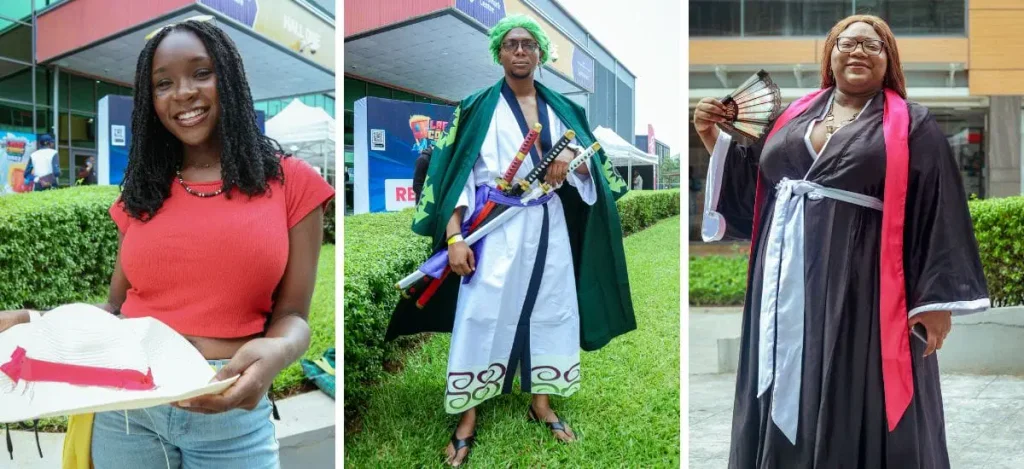
A: I think the community we have done the most for is comics, because that’s where Lagos Comic Con began. We wanted to give African comic creators a home, a stage and an audience that believed in what they were creating. But I’m equally proud of what has happened with cosplay. We watched it grow from something people were sometimes embarrassed to do into a serious form of creative expression.
The one we’re still trying to crack is animation. Nigeria has incredible animators and storytellers, but I don’t think we’ve done enough to connect that talent to the bigger opportunities available globally. For me, Lagos Comic Con has never just been about showcasing communities. It’s about helping them grow. And animation is one of the communities I believe has the biggest story still waiting to be told.
Q: You’ve watched a generation of young creatives come through Lagos Comic Con some of them are now running studios, winning international recognition, building careers. When you see that, what does it feel like knowing the convention was part of that pipeline?
A: Honestly, it’s one of the things I’m most proud of about Lagos Comic Con. I remember when some of these young people were just coming to the convention with drawings, comics, costumes and ideas. Today, some of them are running studios, winning international recognition and creating work that is reaching audiences all over the world. Studios like Comic Republic and Kugali, and many other creative companies, either began their journey at Lagos Comic Con or found the inspiration, community and connections there that helped them take that next step.
That tells me we did something right. We didn’t just create an event where people came to watch other people create. We created a place where creators could meet creators, find collaborators, find audiences and sometimes discover the courage to start something of their own. And when I see someone who came to Lagos Comic Con years ago now employing other young creatives, I think that’s the real legacy. The greatest thing Lagos Comic Con can produce isn’t an amazing event. It’s the next generation of creators.
Q: 15 years is long enough to have regrets. Is there something you wish you had done differently, a decision, a direction, an opportunity Lagos Comic Con missed that still sits with you?
A: Absolutely. Fifteen years gives you enough time to look back and see the things you could have done differently.
I think my biggest regret is that we didn’t scale fast enough when the opportunity was in front of us. There were moments when Lagos Comic Con had the attention, the community and the momentum to become something much bigger, but we were often operating with very limited resources. There were opportunities we couldn’t pursue because we simply didn’t have the money, the infrastructure or sometimes the experience to execute at the level we imagined.
But I also don’t spend too much time regretting those things. Lagos Comic Con was built through trial and error. We learned by doing. We made mistakes, we survived them, and we kept coming back. If I could change one thing, I would probably tell my younger self: believe bigger, earlier. Because looking at what the community has become today, I realise we were capable of much more than we sometimes allowed ourselves to believe.
Q: Where does Lagos Comic Con go from here? Not the PR answer, the real vision. What does the 20th edition look like, and what needs to happen in Nigeria’s creative industry for that version of the convention to be possible?
A: The real vision is that by the 20th edition, Lagos Comic Con should no longer feel like just a convention. It should feel like Africa’s creative industry coming home for a weekend. I want to see Nigerian comics, animation, gaming, film, cosplay and digital creators operating at an international level, with the convention becoming the place where African talent meets global audiences, studios, investors and opportunities. But Lagos Comic Con can’t do that alone.
Nigeria needs a stronger creative ecosystem: better funding, stronger intellectual property protection, serious distribution platforms, more animation and gaming infrastructure, and more opportunities for creators to turn their talent into sustainable businesses.
If we get that right, the 20th edition won’t just be bigger. It will be a reflection of how far the African creative industry has come.
That is the Lagos Comic Con I want to build.
With Lagos Comic Con 2026 just three days away, the countdown is officially on. From comics and animation to gaming, cosplay and everything in between, the 15th-anniversary edition is set to bring Nigeria’s geek and creative community together once again.
Don’t miss your chance to be part of the celebration. Get your Lagos Comic Con tickets now and join thousands of fans and creators on September 12 at Landmark Event Centre, Lagos.
🎟️ Get your tickets here: Lagos Comic Con Tickets
The countdown is on. See you at Lagos Comic Con!